Citroën ID20 convertible 2021: The makeover part 1 – the plan

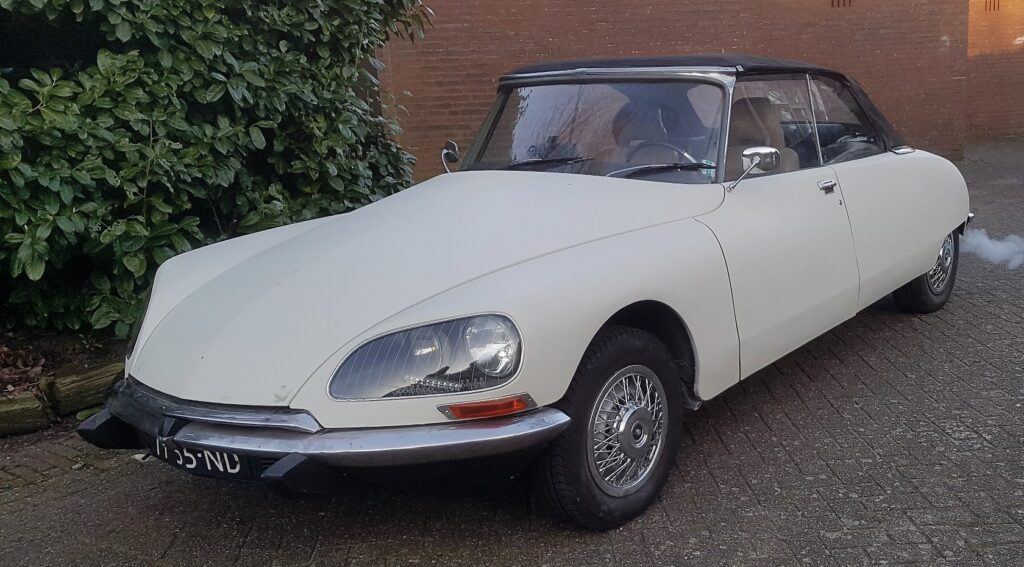
Started today September 1, 2021 the complete makeover of the Citroën ID20 originally converted to convertible by Oord in 2016.

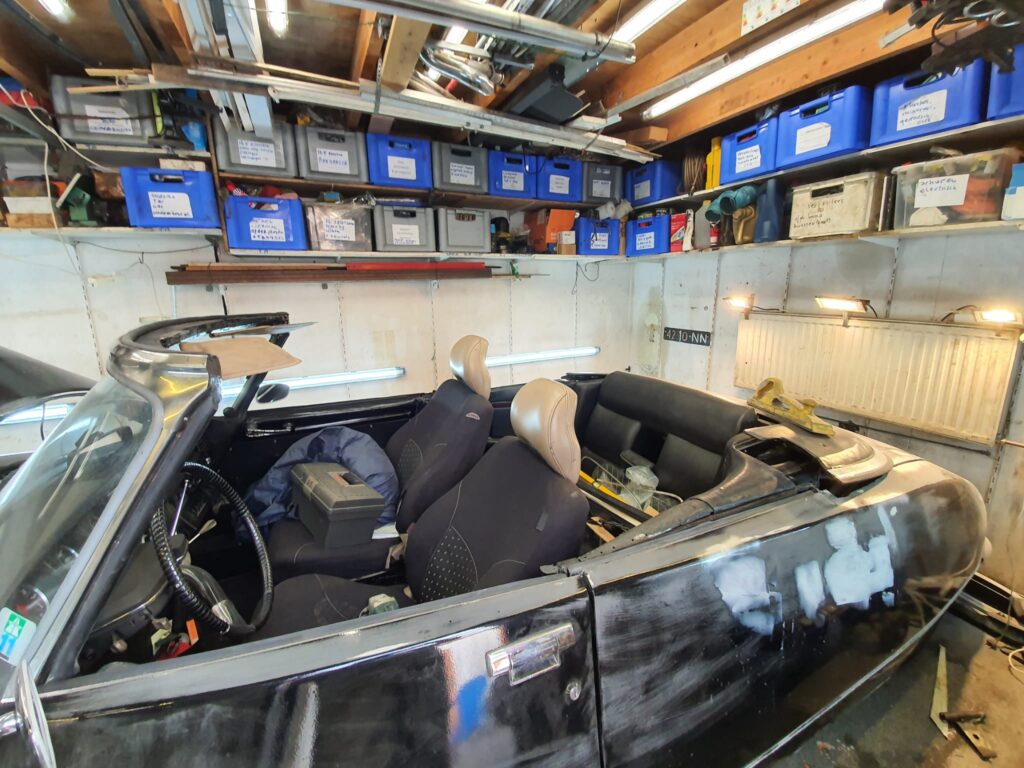
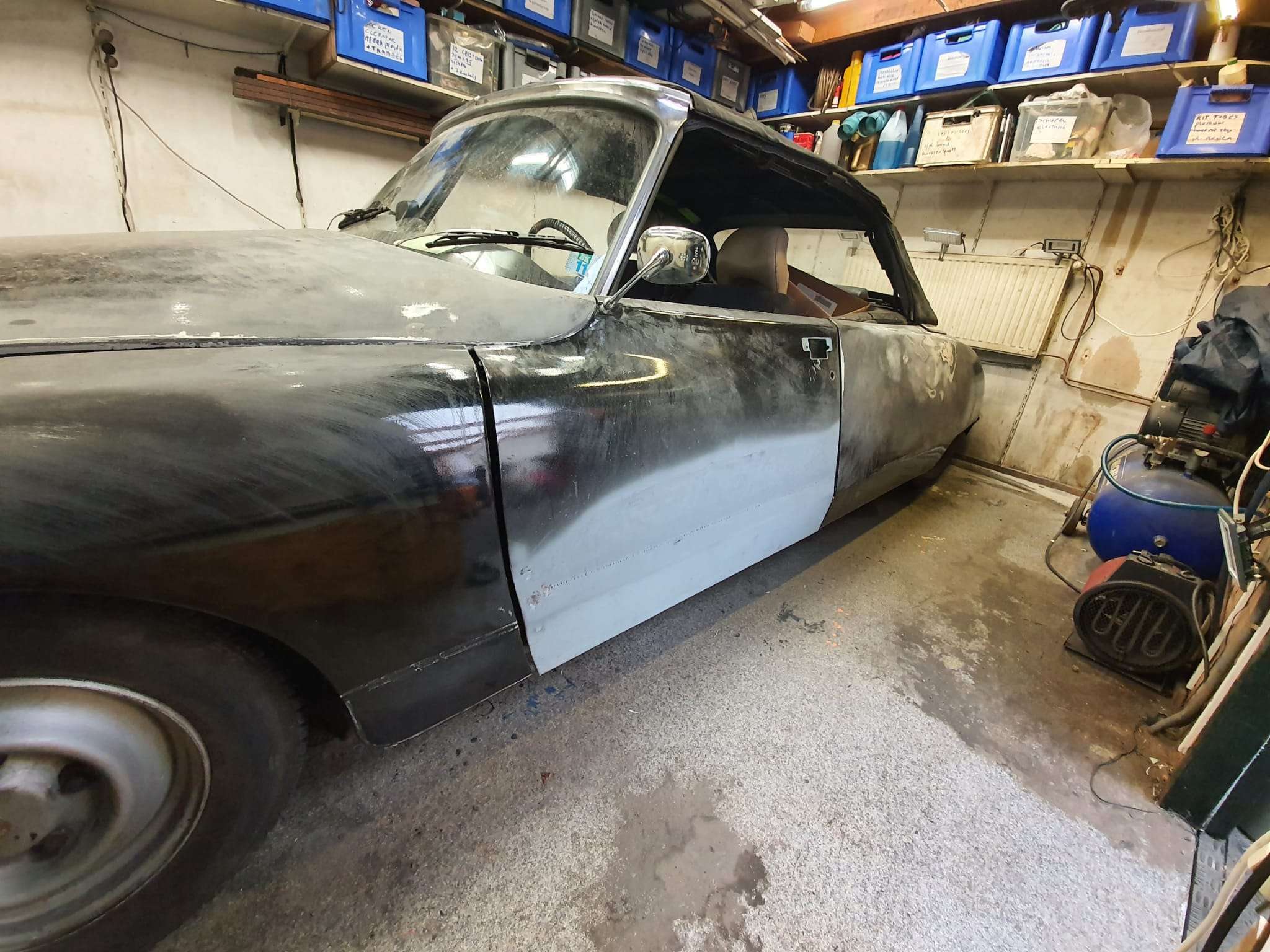
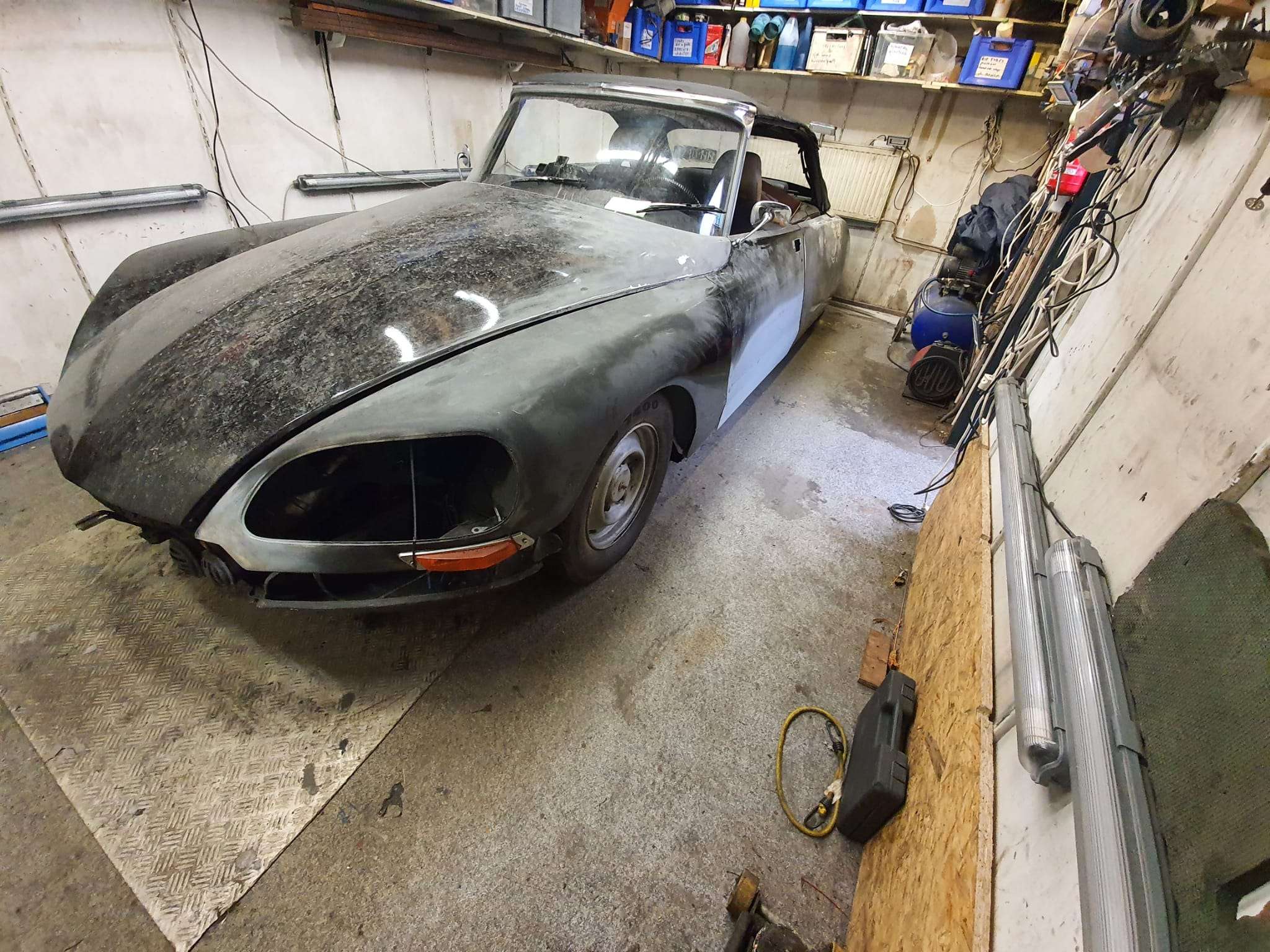
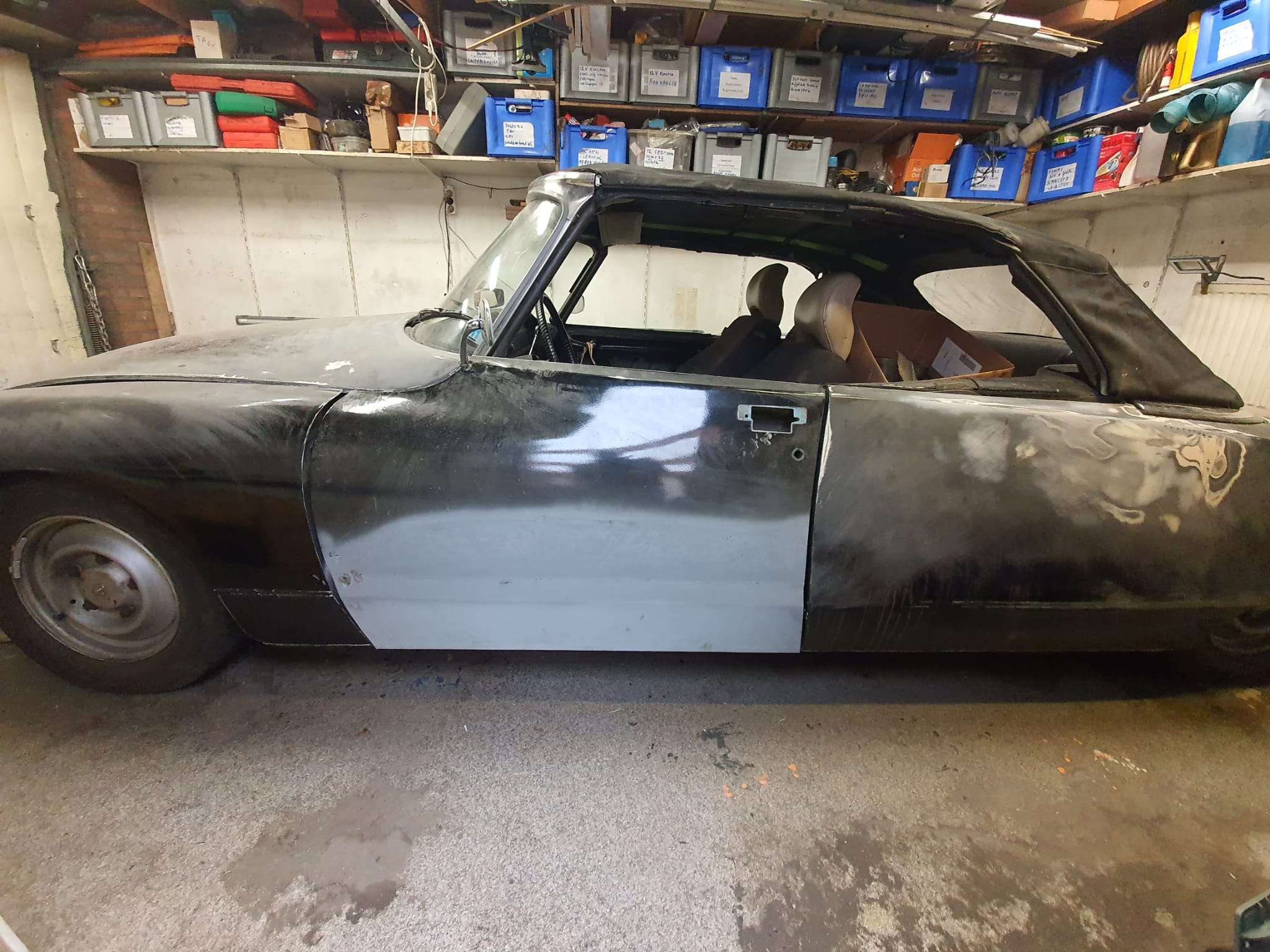
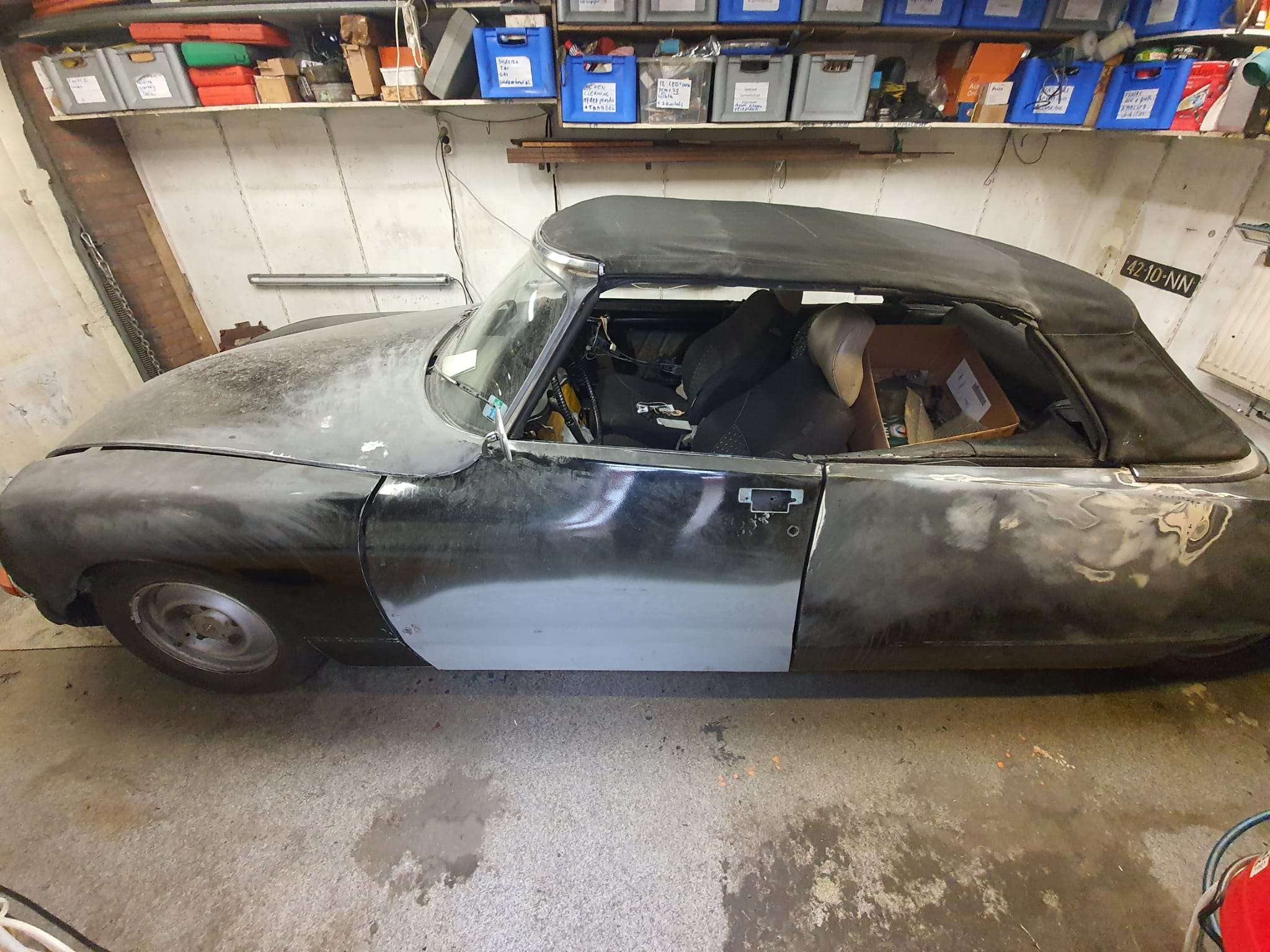
This was the car at the (pre-) last round of paint (primer) in 2018:
And- this time the color will be RED:

The exterior of the car will be completely dismantled, all sheet metal will be removed and where necessary, made tidy.

The original stainless steel Pallas wheel covers will be replaced, the plastic (2CV) spoke covers will be removed.
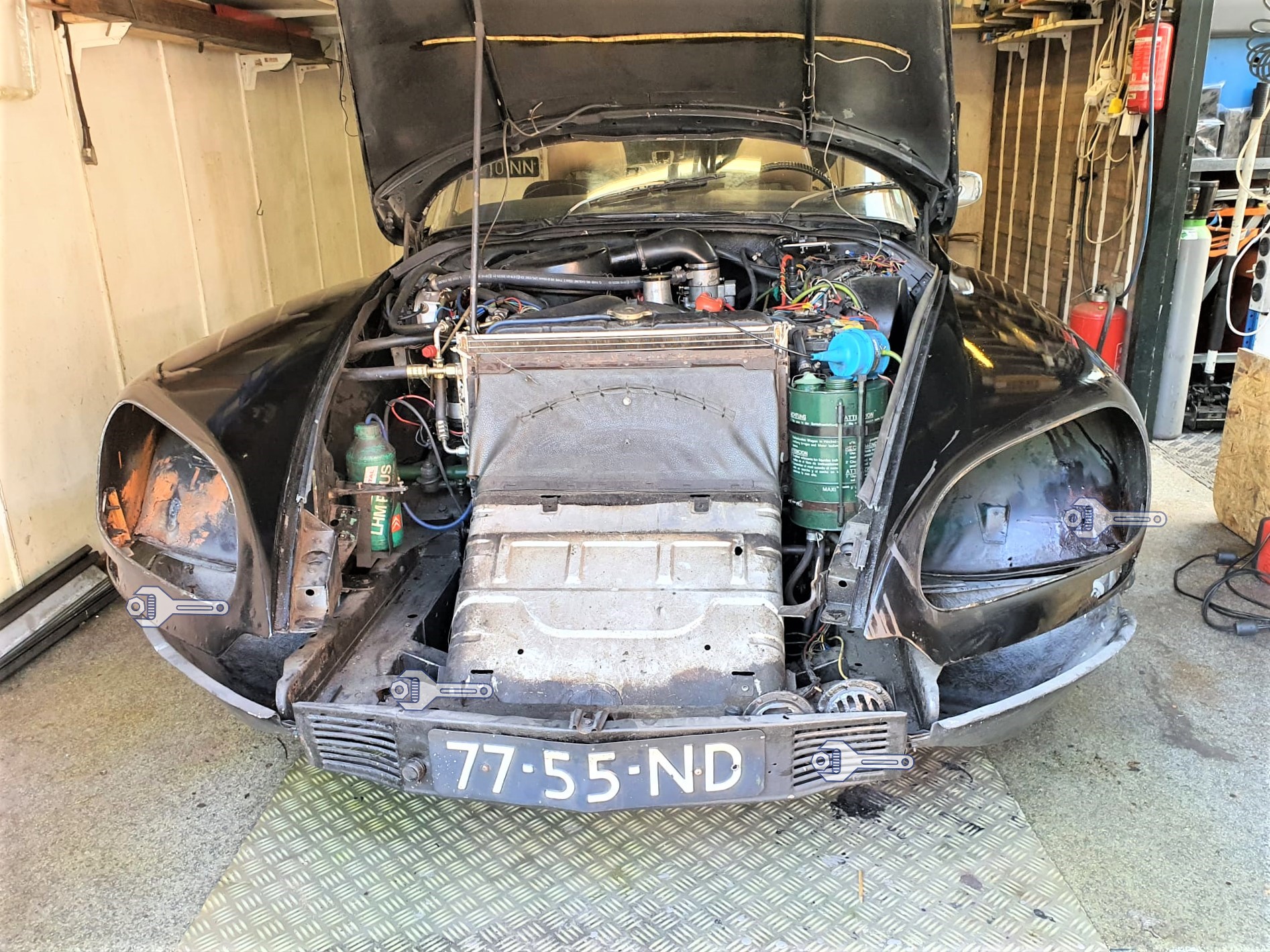
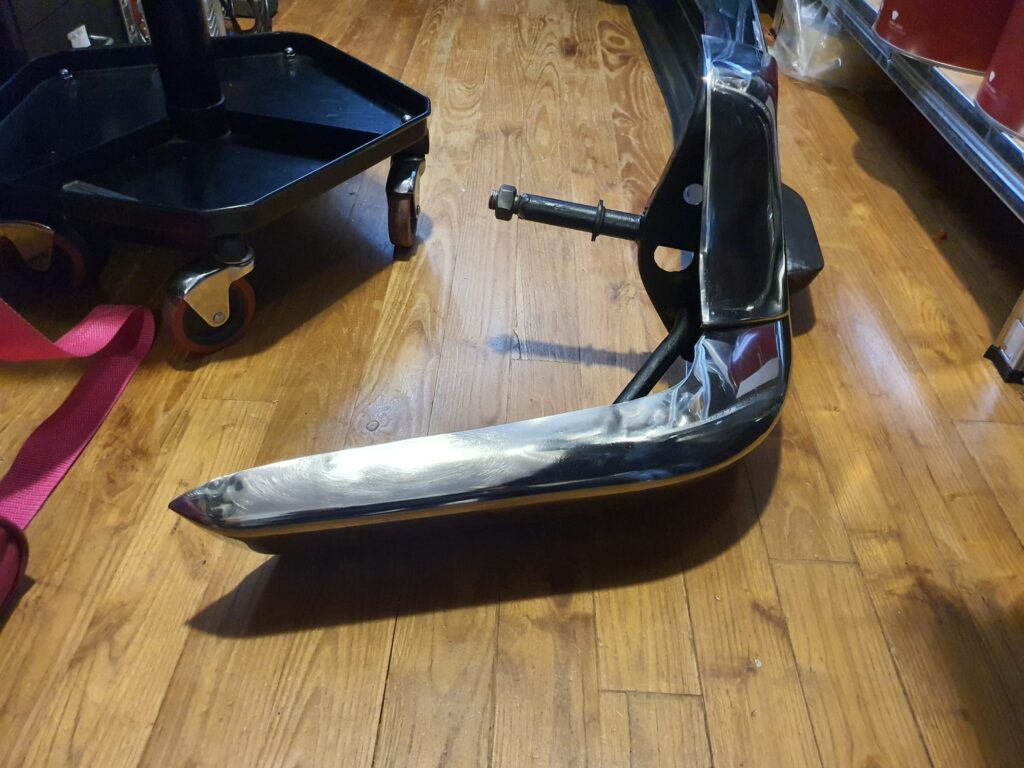
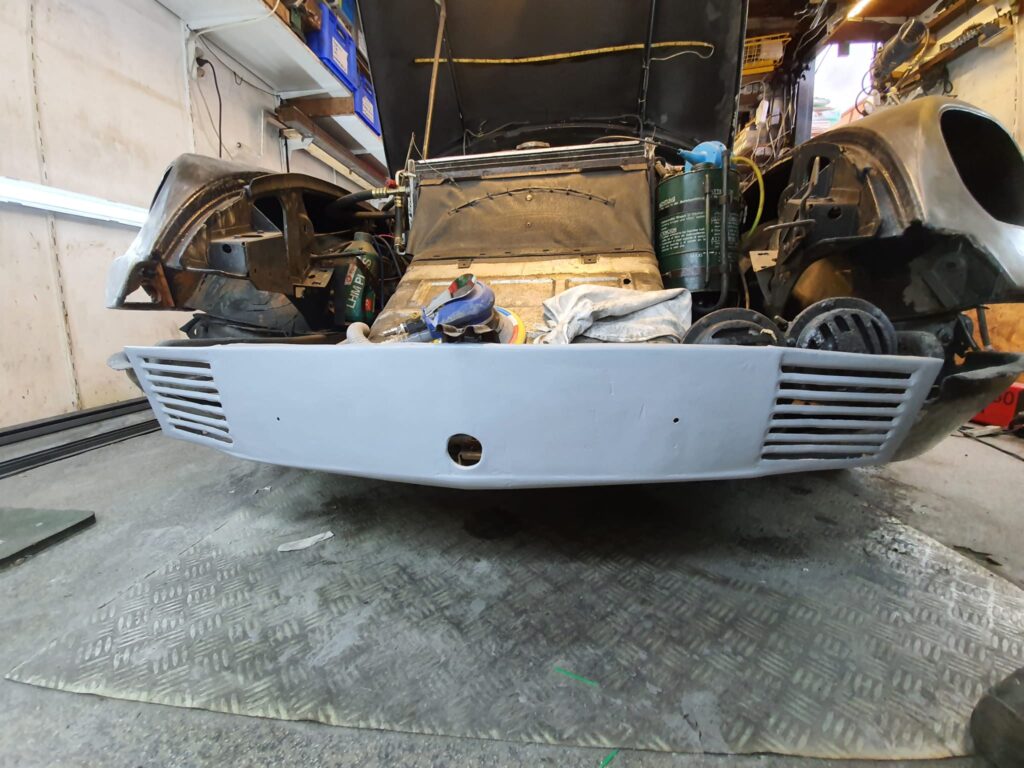
The front bumper has been disassembled and is being polished. The rear bumper will be replaced for a newly purchased extended convertible bumper, also already completely polished.

The roof will be completely recalibrated and the cover plate of the roof will be covered with Sonneland fabric. The black Sonneland cover is fitted with the typical push buttons.

The original 1966 Citroën ID tilt front seats go to the upholsterer and new black leather is fitted.

All loose parts are removed from the car, then the car is tightened.  First coarse sanding, 2k primer, contrast spraying, medium sanding, fine sanding and then to the painter.

Oh yes, the air conditioning will be removed.  That is very superfluous on a convertible and I can also remove the extra radiator of the airco that sits in front of the cooling water radiator.  That saves on originality!

And that ugly antenna goes off at the same time!  I have a reinforced antenna that goes on the inside of the windshield. On the right side.  That is hardly visible and very easy to hide in terms of cabling, and close to the radio!  And this antenna can be used for DAB+ at the same time.

The car will be tomato red RAL 2013.  The professional (Basf) Glasurit 2K paint, hardener and thinner is already in stock! The inside, side, bottom and top of all sheet metal parts will also be painted red.  The inside of the trunk, doors and doorposts will be red as well.

After painting, finally the by then re-upholstered seats can be put in and all new grey NOS carpet parts can be mounted.

The trunk lining can then be put in as well, and then all the external parts that were previously removed and either refurbished or replaced can be fitted.

Specifications: 4-cylinder in-line ID20 with 2.3 liter engine, two-stage carburetor and original electronic ignition.  Air conditioning (manual). Manual sunroof.   4-person, 2-door version. LPG installation on the license plate.  Last 2 years renewed: Water pump, alternator, hydraulic pump and fuel pump (All precautionary).

The intention is to put the car up for sale in the spring of 2022, to make room for a next project.

A P1800S with 1970-1973 build and overdrive would be a nice idea.

Or building a mehari yourself with one of those French replica mehari kits, or maybe stripping a 2CV and then using a fresh chassis and the old 2CV stuff to build the body of a Mehari.

Well, as long as petrol cars are still allowed to drive around, I can continue with the hobby for a while….

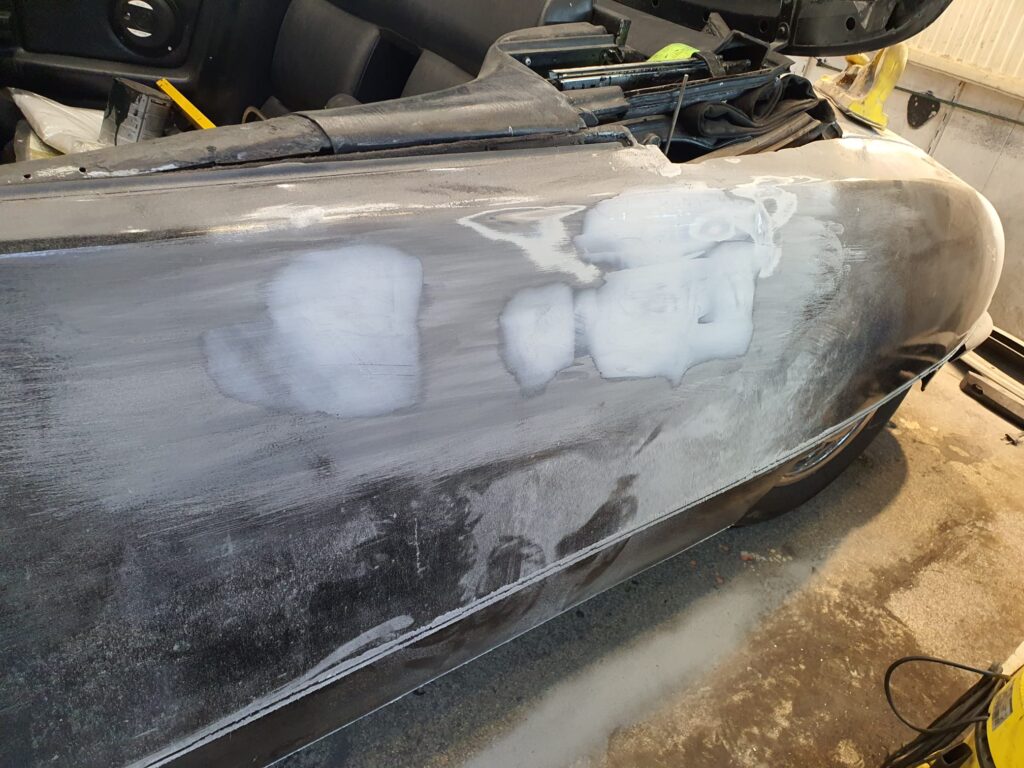
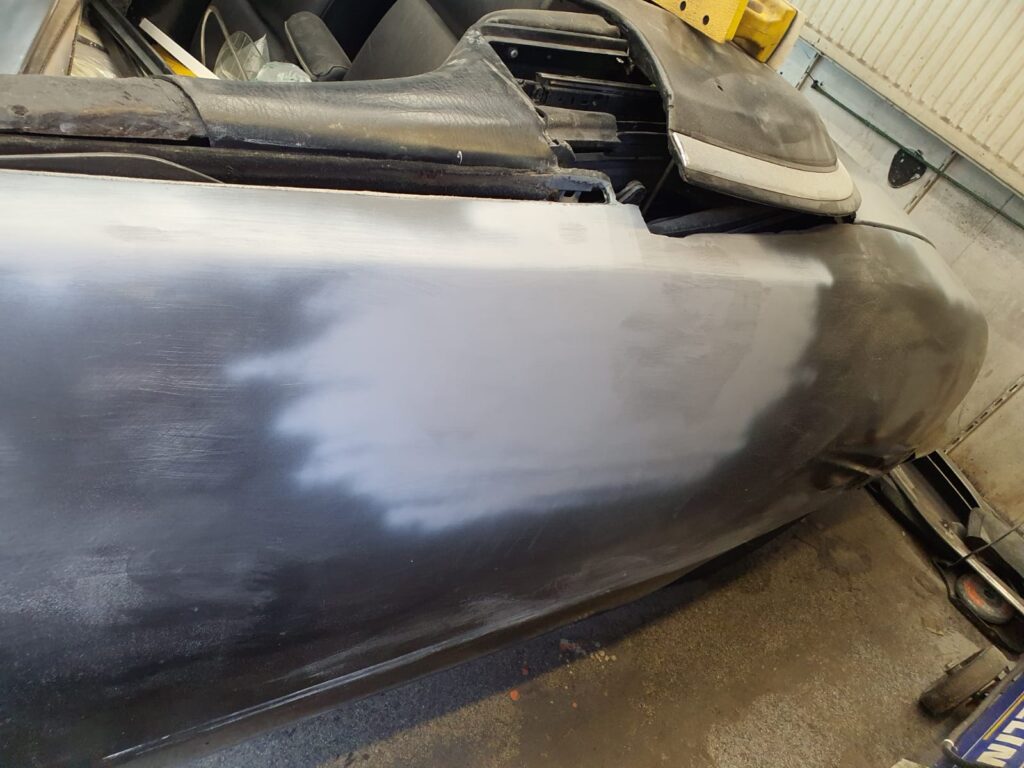
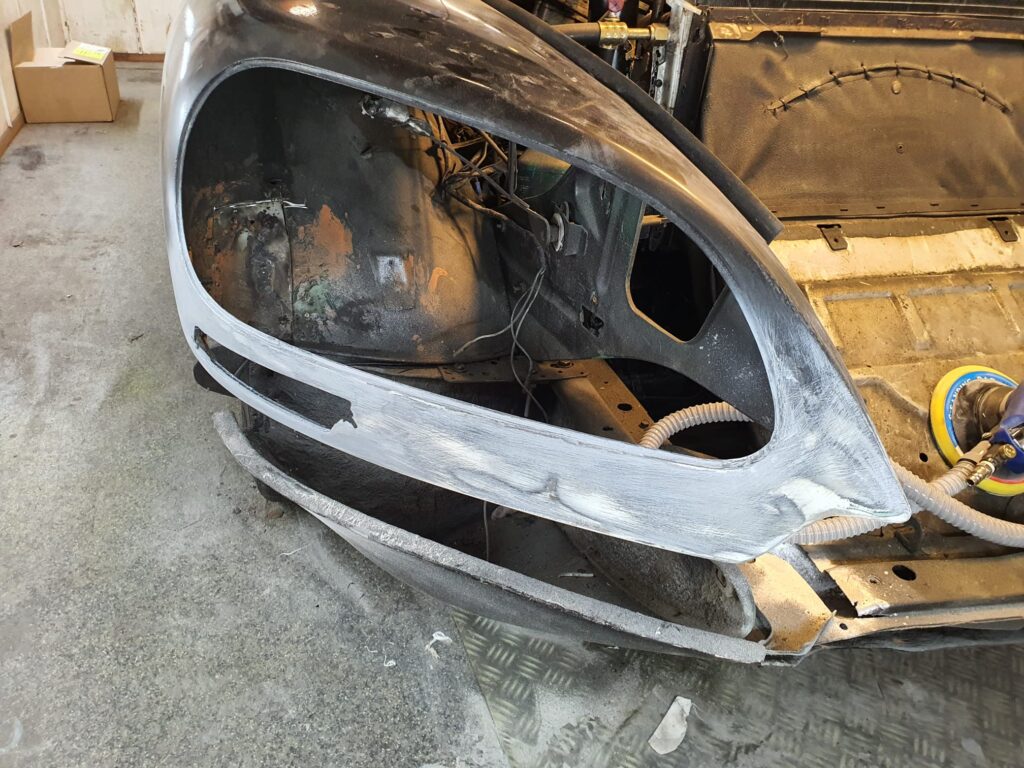
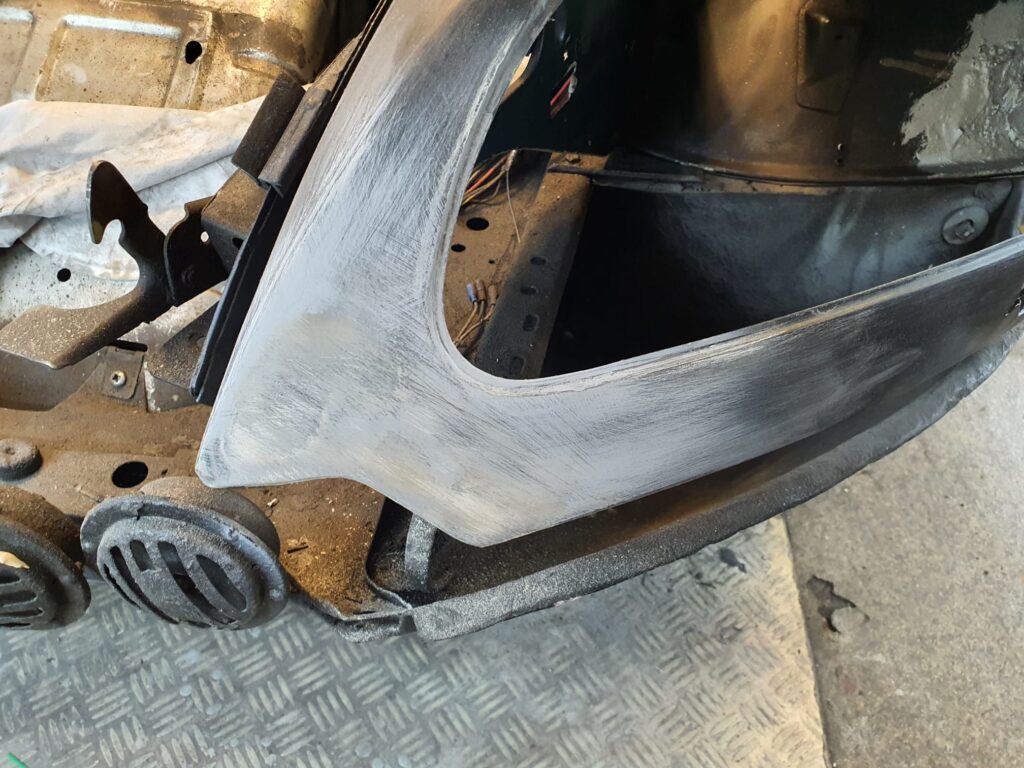
Update September 3, 2021: Completely emptied the front fenders, and removed all the tar and tectyl.  Ordered a new replacement plate (left mounting eye was a bit baked on, will be made neat again with a new eye and replacement plate in the inner fender. . Fender edge will also be repaired).
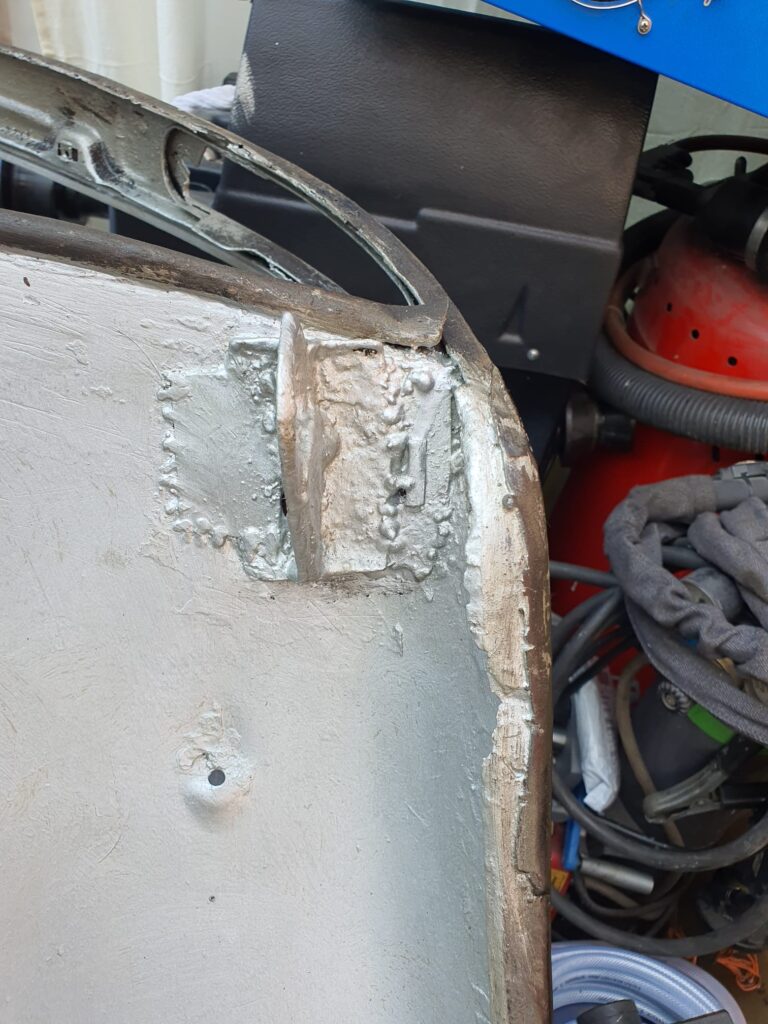
The headlight housings will be cream colored again, they are black now.  There are already new headlight mirrors in them so that saves some time.

The front wings were completely cleaned on the inside and underneath and then put in grey hammerite.
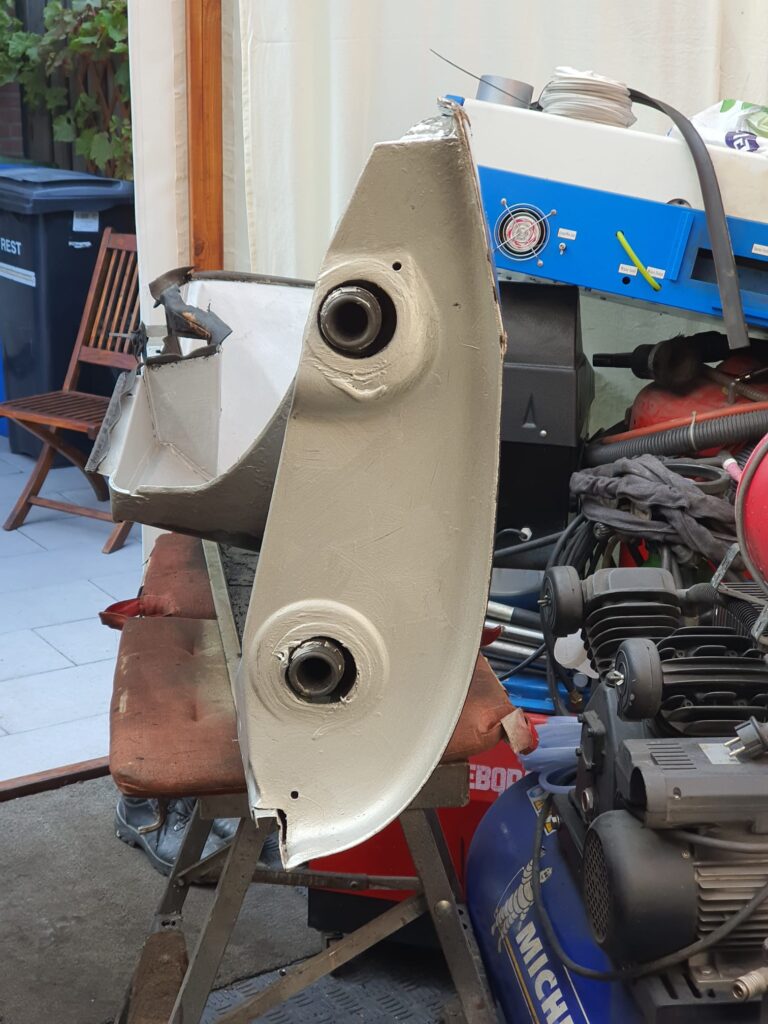
On the wheel arch side, there will be a black colored protective polyester coating. in my experience, that is the only way to protect the inside in our wet country with all kinds of gravel and other debris on the road.

In the rear, I previously installed aftermarket aluminum mud trays for protection in the inner fenders.

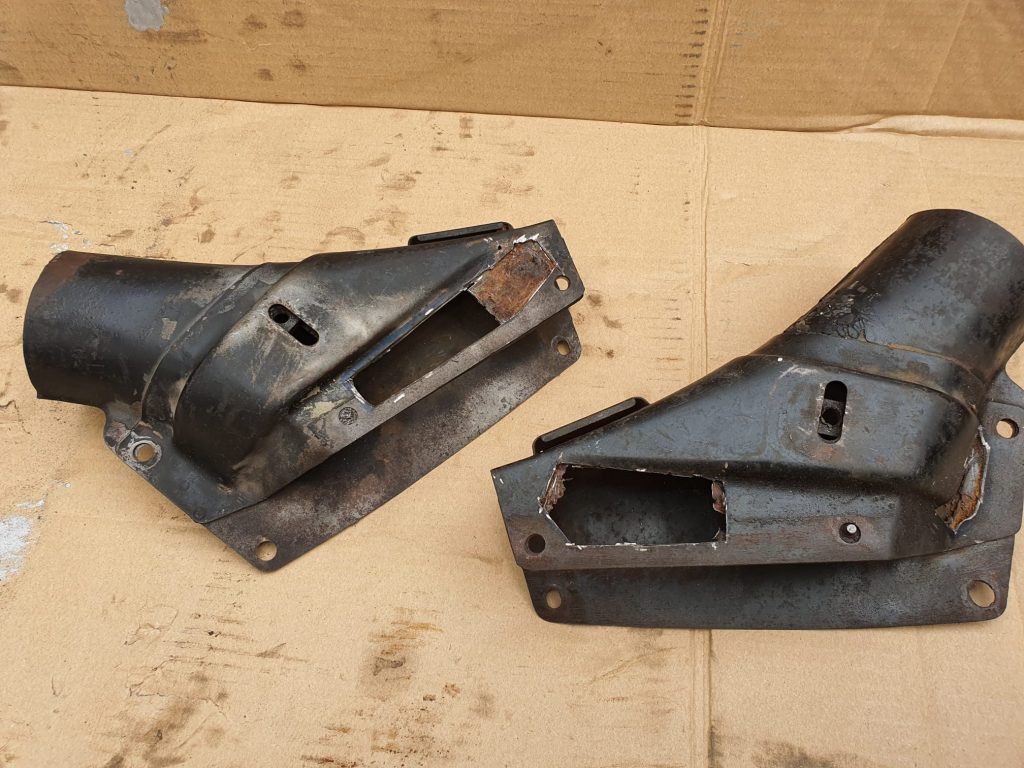
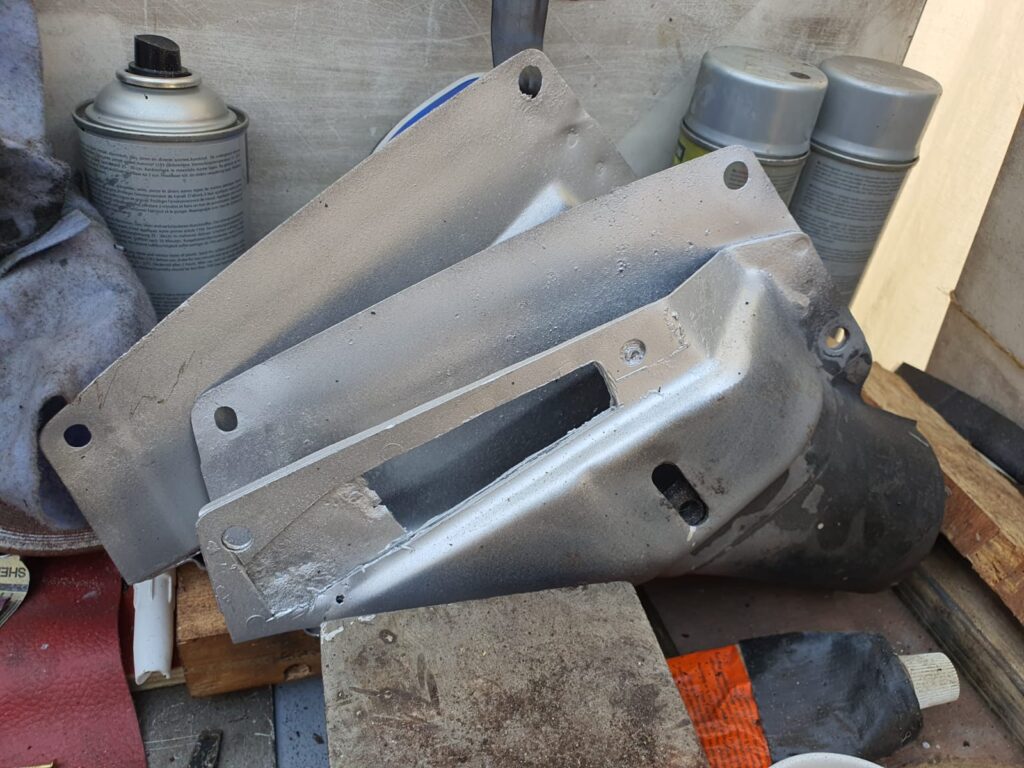
I completely disassembled the front bumper and replacement (very good NOS) sheet metal parts were arranged.  The air horns were bad and the rest of the bumper connecting sheet metal was pretty bad too.
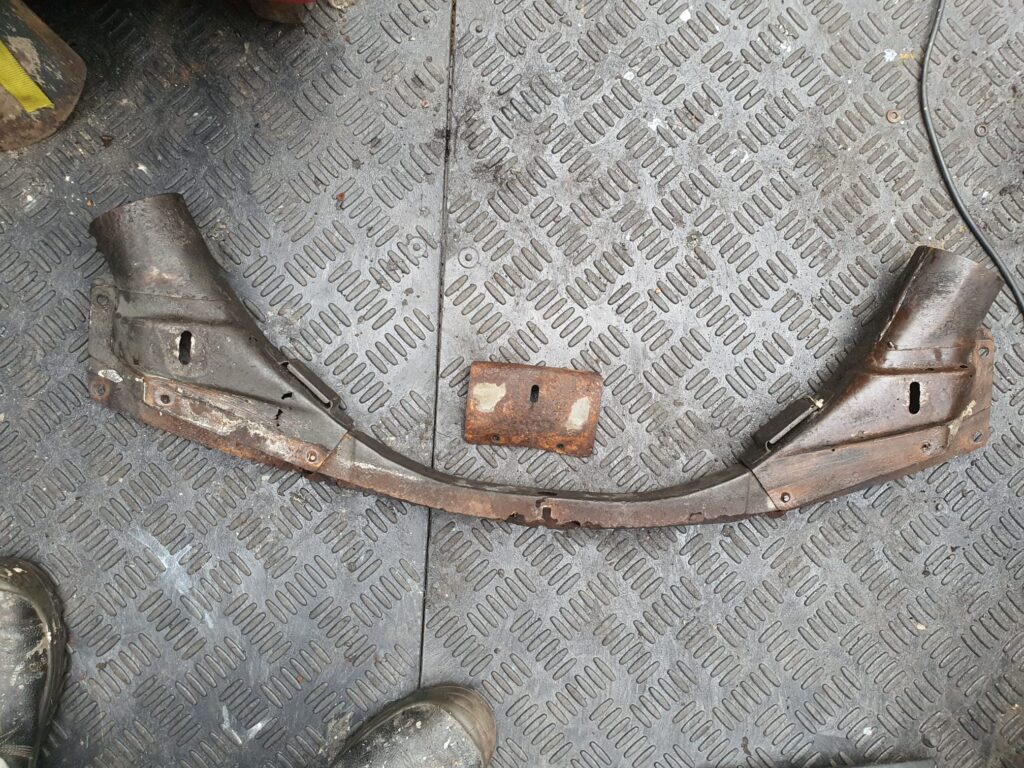
Oude plaatwerk tussen en achter de voorbumper

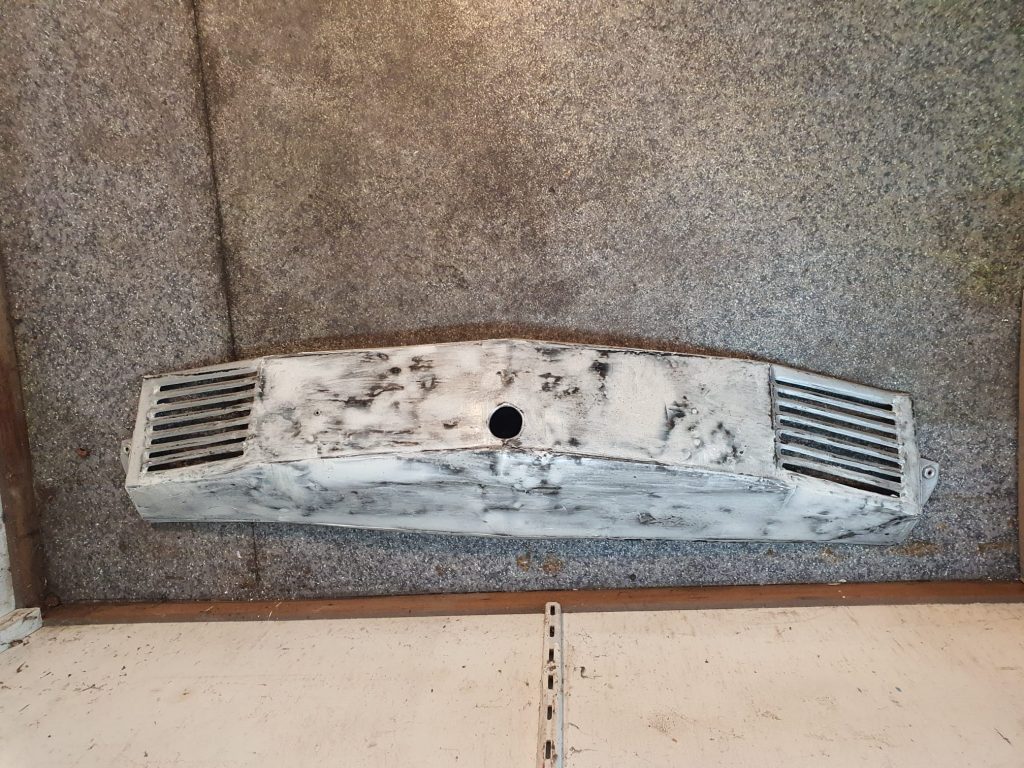
The license plate holder is also immediately replaced for a NOS one. The bottom of the licence plate holder has also become a bit too thin.

I had replaced the stone trap for a polyester type much earlier, so that will come off but it will also go back on after the underside has been cleaned, painted in the right color (same as the body) and the plating on the bottom has received a black anti-corrosion treatment.

The engine and gearbox, drive shafts, suspension and wheel bearings will be overhauled this winter, so these will also be taken out completely so that I can access the chassis properly.

I have to check if the threaded bushings in the chassis where the double front suspension is mounted are still in place. 14 years ago one bushing on the right side was welded again, but only on the outside because the engine was still there.  Now that everything is going to be taken out anyway, I can do the inspection on this point at the same time.

After the front wings, it is time for the doors.  I am going to saw off the bottom so that the normal size of an original convertible door in terms of height remains.  Then I’m going to weld the doors shut and finish them off.  The body near the doors will be widened to the outside of the door so that a wider sill becomes visible on the outside below the doors.  In this way the bodywork under the doors continues from the front near the A-pillar to the rear.   The yet to be purchased lower decorative strips then run from the A-pillar to the rear reflector in one go.

Lengthening the doors is not an issue, because the first Chapron models were also executed with the original size of the front doors.   Nice excuse not to do that with my convertible either. In terms of boarding, there is not much improvement.  With the new old handle seats, the backrests can easily be moved forward, if anyone would want to ride in the back.  Besides, it is far too much work to have all the windows made anew, moving the B-pillar I see as possible but also a shame to open everything again now that everything fits nicely.

THE SPUITWORK

Because painting is a profession, I’ve been looking for a paint booth that can be rented near the garage and the workshop of the ID20 convertible.  But it turns out to be difficult just to rent a space for half a day.  Since I do all the prep work myself and already have the paint and such in stock, there is little to be gained for the rental company.  I also take my own sprayers with me.  And, if necessary, also the compressor and dehumidifier.

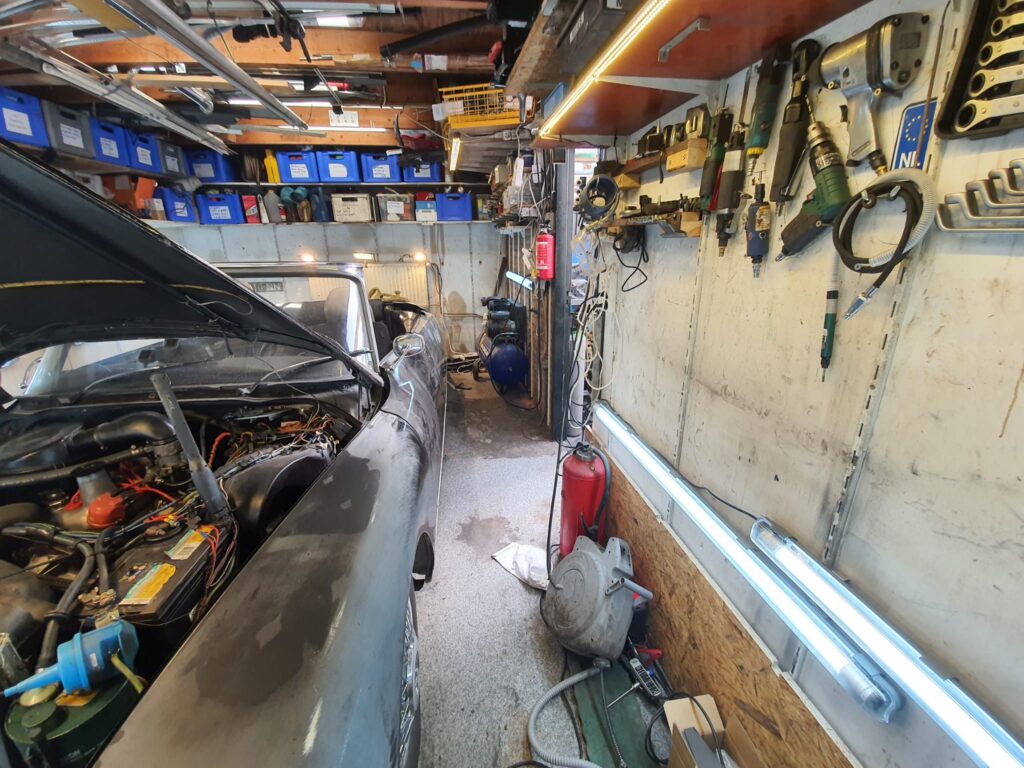
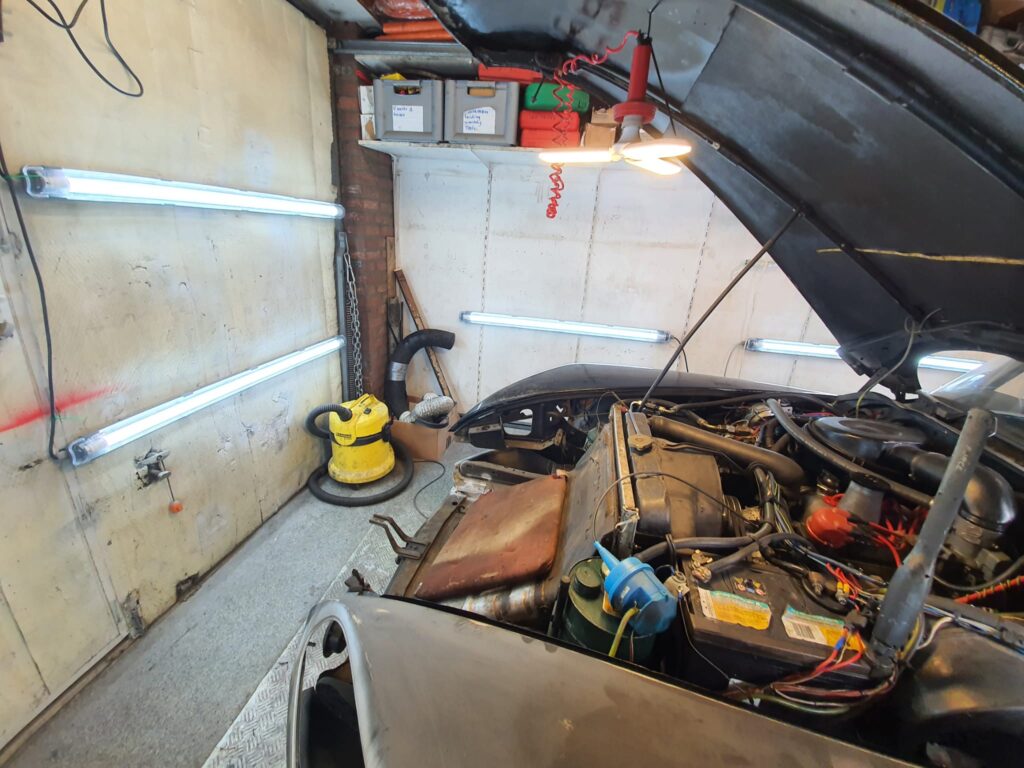
So it will probably come down to me spraying the car in my own garage.  In preparation, I have already made the suction in the existing recesses in the outer wall, and the filter can easily be placed against that.  Heating comes from 3 electric radiant heaters that can be attached to the ceiling, of the type outdoor heater.

The suction of the compressor comes from under the greenhouse, which is completely covered.  In the pressure line there is a dehumidifier, in the spray room the dehumidifier is on continuously before spraying and I spray HVLP with about 2 Bar.

Lighting from the ceiling is arranged with 8 fixed LED fixtures, from the side also 8 LED x 120cm LED fixtures are placed, with cold white light 6800K.
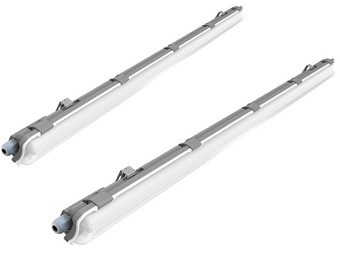
Before spraying with the Glasurit 2K lacquer, I cover both the ceiling and walls and floor with plastic so that dust has no chance.  The extraction and suction of air goes through filter boxes.  I get my own air for inhalation from outside through a long 34 mm hose.   During spraying, all doors are unlocked and there is always someone around.  The compressor is outside the spray room so the overpressure must be able to get outside through the filter box and the fans in the wall. I don’t expect much spray with the low spray pressure and the electrostatic preload on the car. So also in terms of breathing I don’t think I’ll have any problems but as a precaution I prefer to get my own air clean from outside.

The garage is 3.5 by 5.5 meters and now that all the stuff from the garage is in the greenhouse, I can easily walk around the ID20.  So the spraying should also be easy.  I plan on when spraying it to do the inside of all things like doors, screens, tailgate etc first and then the outside.  Since I disassemble all rubbers BEFORE spraying, I can just close the doors and lid after spraying the inside and continue spraying in one pass.

First layer with 5-10% thinner and the second layer after 15 minutes just pure.  The third layer goes after 30 minutes with 5% thinner and the last layer after 45 minutes with 10% thinner.

This (already 12 years old) Glasurit paint does NOT need clear coat to get a good shine and because of the thickness of the paintjob I can always clean/polish the car for an even better finish!
TO PART 2

Citroën ID20 convertible 2021: The makeover part 2 – preparations

Picked up from Daniel Q yesterday with many thanks again, also for the tea!
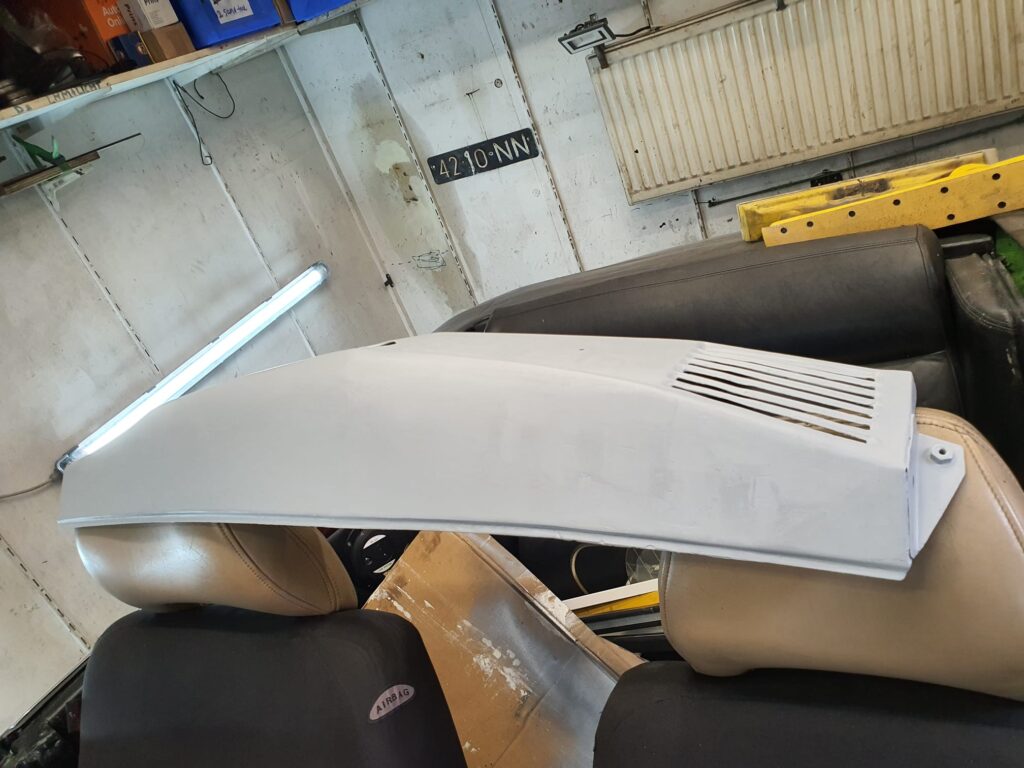
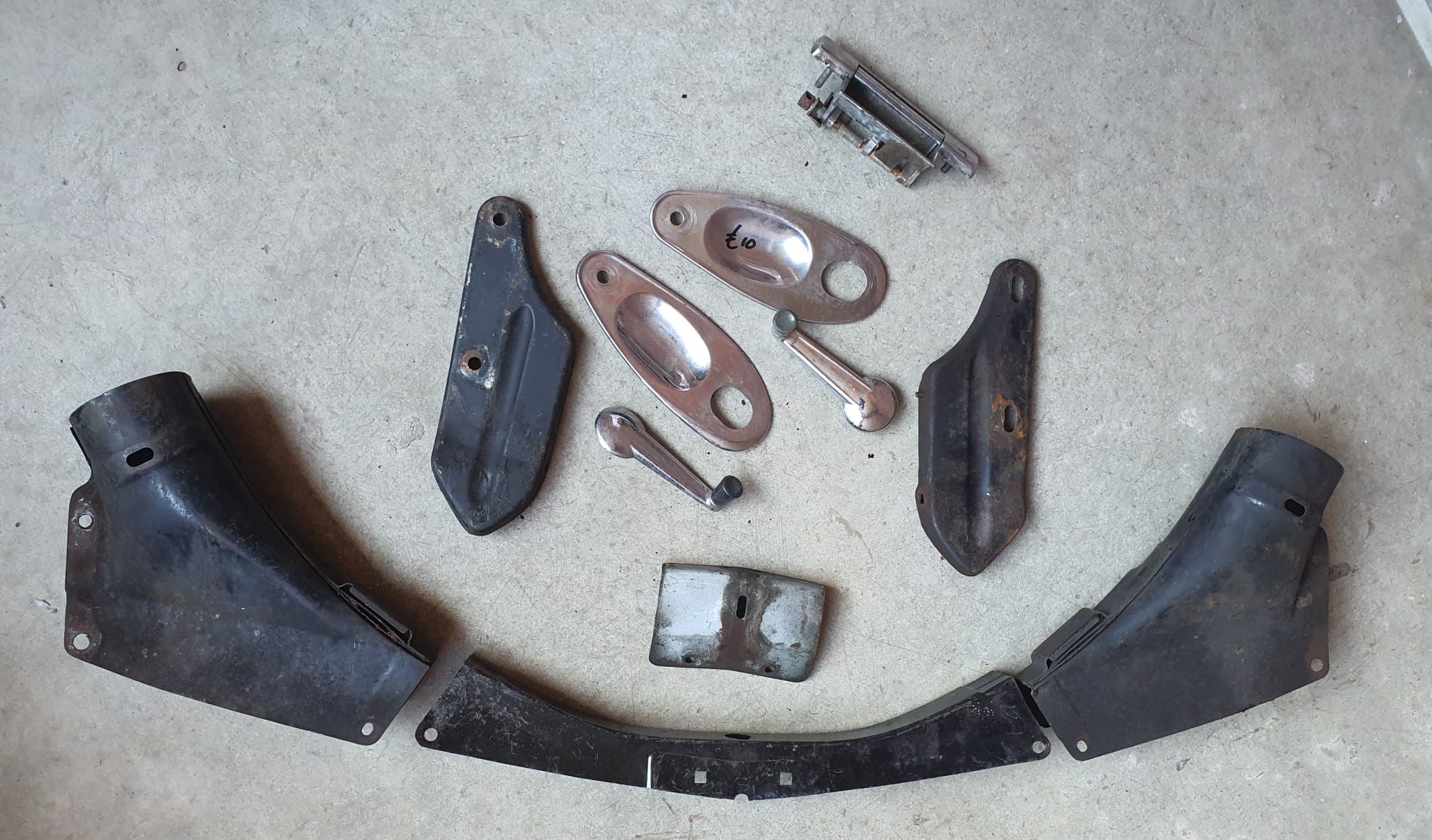
2 air hoods and spacer, connector and front bumper mounting brackets. Partly NOS, partly used and in good condition.
Replacement outside handle for the left door
2 window cranks
2 Mudflaps original rubbers for the front fenders
2 stainless steel inserts to be mounted behind the inside door handles
Various DS small parts

The license plate holder I already had as spare.  The one I took off of the car is no longer usable.

New nicely polished convertible bumper, everything on the inside has been redone as well. The spider-bumper holders are nicely refurbished and preserved. Costs something and you have something right away!

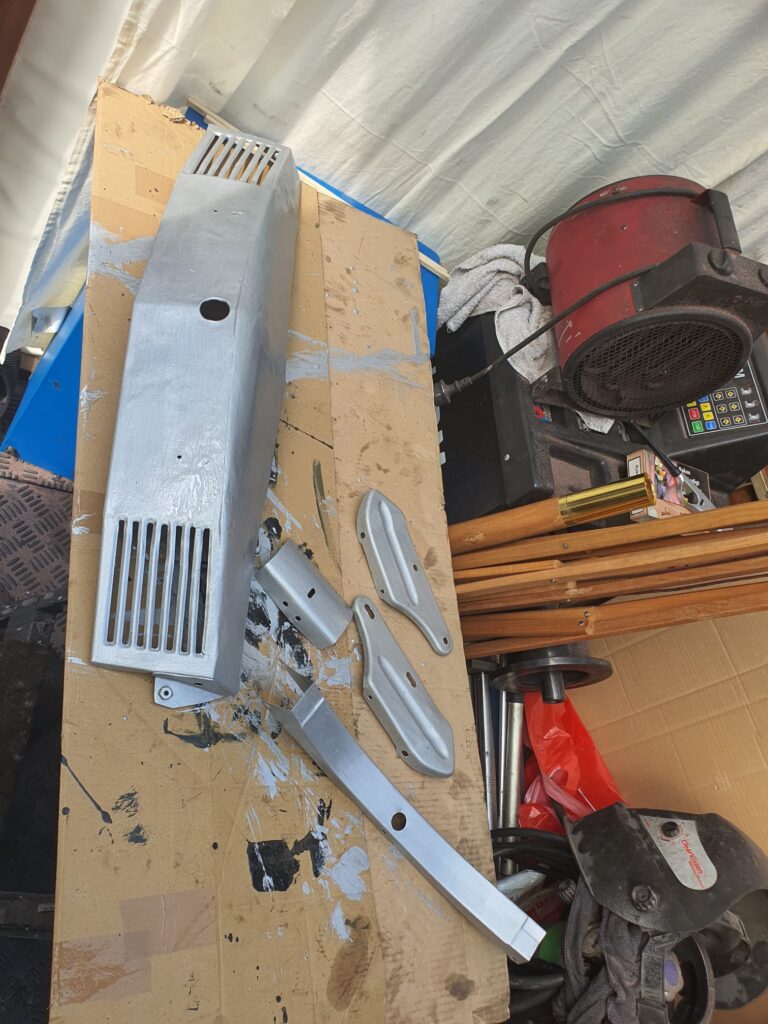
Took out bad parts of the 2nd hand air horns so new sheet metal could be welded in.  The happers were blasted and then treated with zinc spray.

The spare license plate holder has been neatly flattened.

And primed
Just a quick fit


Ordered today 5-9-2021:

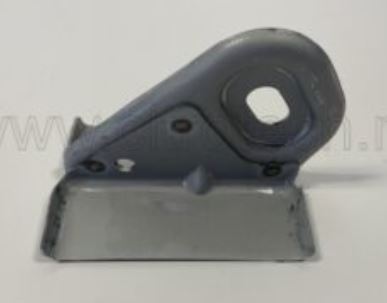
New suspension eye for L front screen

  • 8 x LED 120cm fixtures at ibood with 6400 Kelvin bulbs for the side van de garage
    and behind a few more existing emitters, light is everything when you are sanding and plastering!

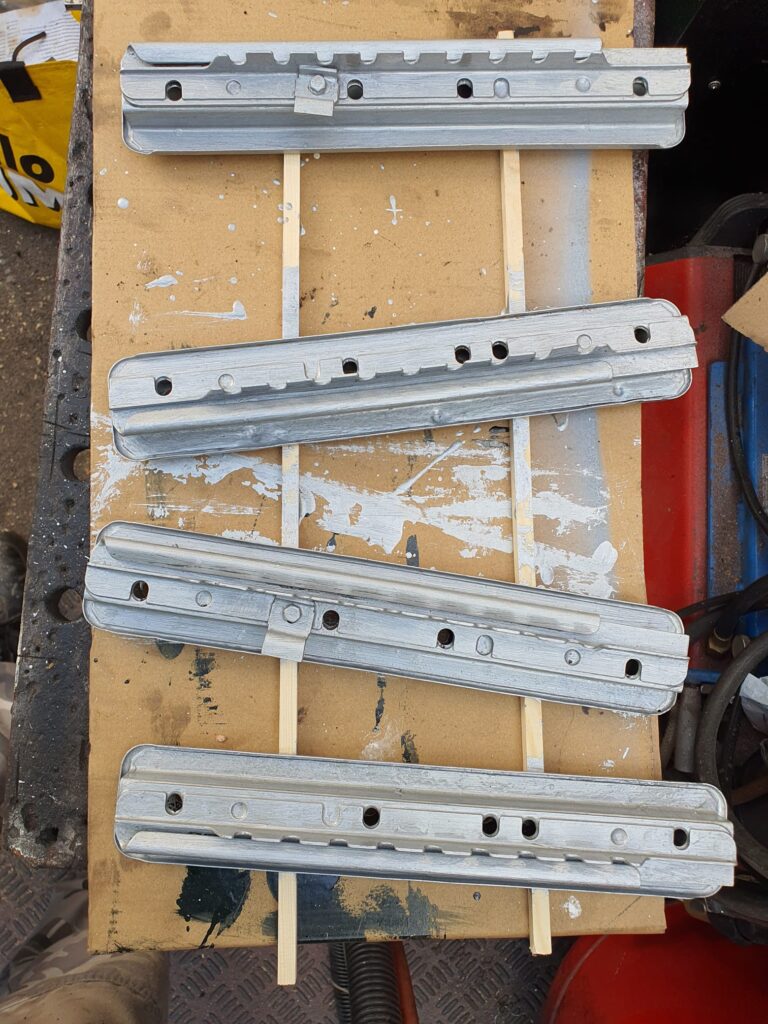
  • The rail holders of the tilt front seats

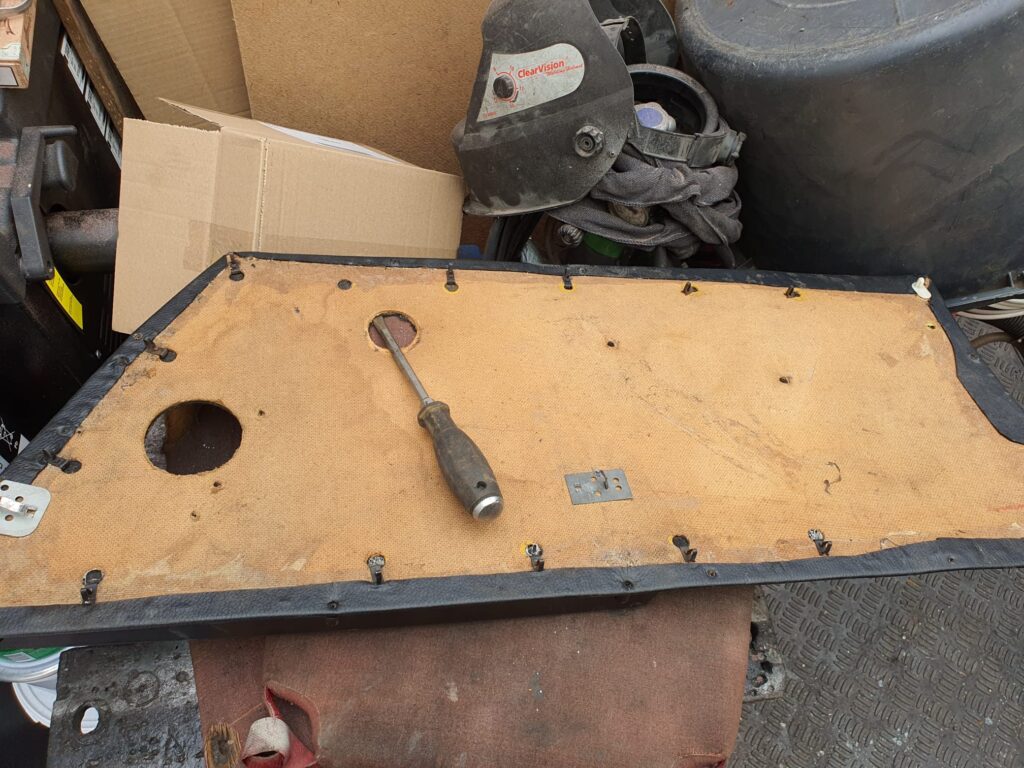
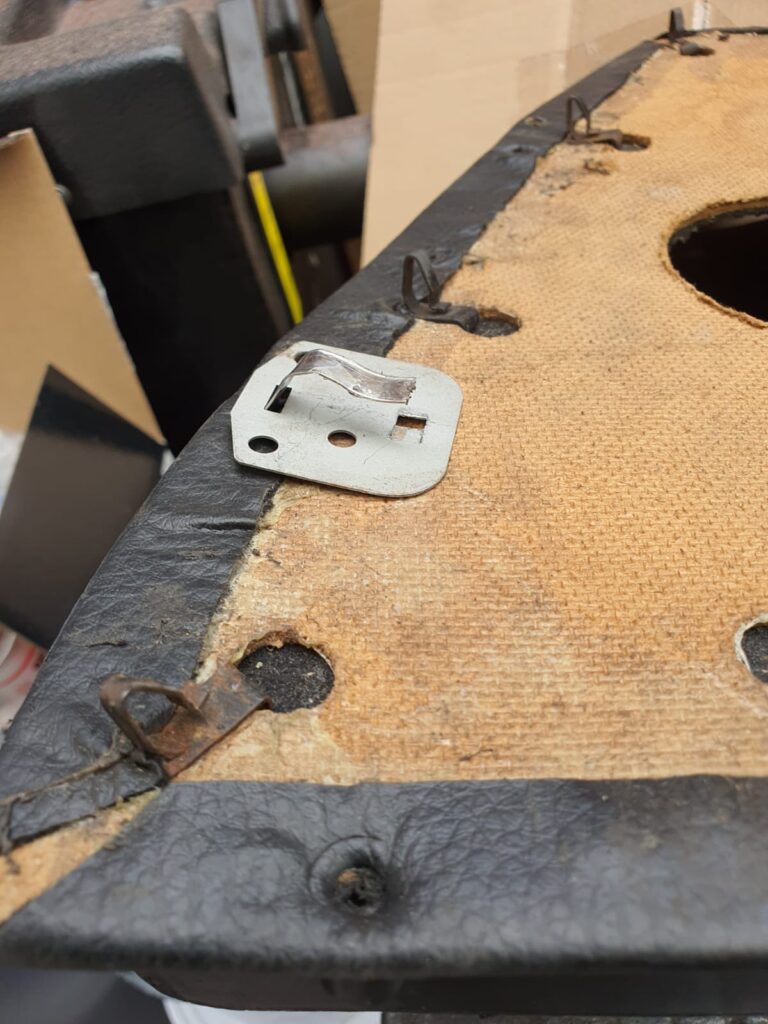
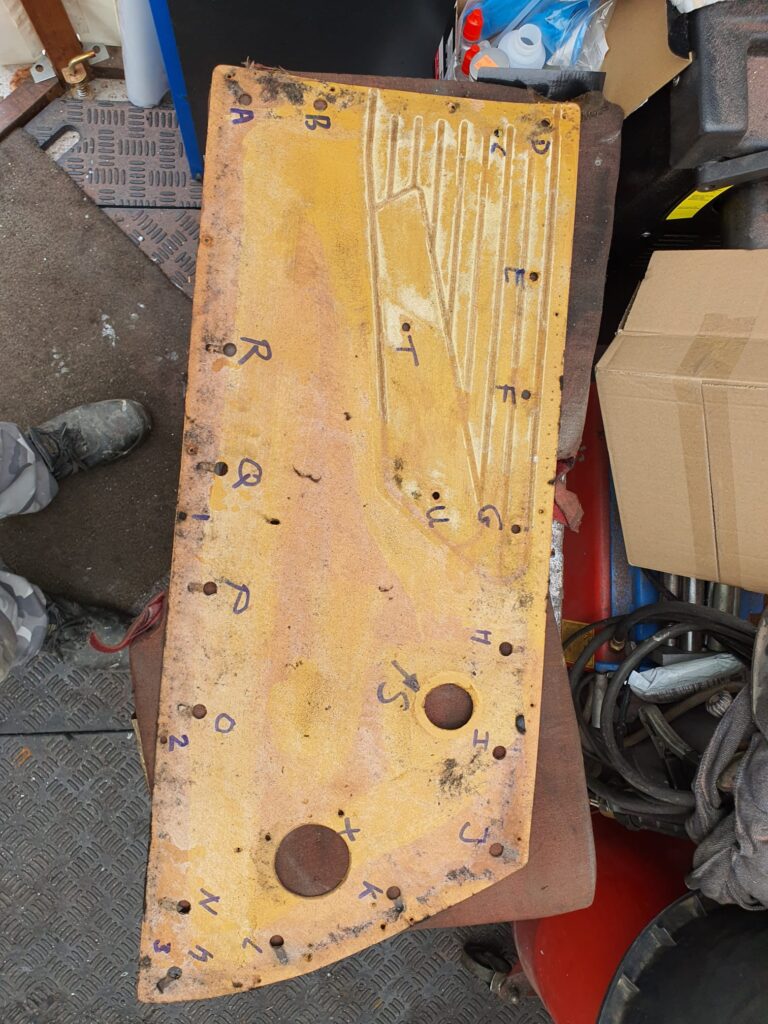
    Left door panel, stripped. I will probably use these panels again. The plastic replicated panels seem to be too floppy anyway, and deform too easily.

Citroën ID20 convertible 2021: The make-over part 1 – the plan

Citroën DS/ID20 1970 convertible: The final makeover part 3 – execution

In this section all the info and photos about the installation, assembly, finishing will be presented:

This post is available in Dutch (switch to Dutch to read the article in Dutch)

Interior paneling
Spraypaint jobs
Carpeting the chairs, sofa, door panels
Exterior strips
Bumpers
Lighting
Gear shift controls
Handbrake
Wheels, tires and wheel covers
License plate holders
License plates
Hood tie
Speakers, radio and antenna
roof lining
roof lock
roof cover lining
Etc.

Web hosting at home with a DS718+ Synology Web server

The performance of my larger sites left a lot to be desired, and the costs are running up considerably.  I had over 10 sites running, all with the same provider and the costs per site vary between 185 Euros per year and 65 Euros per year.  For the large sites I have 5GB storage and the smallest is 200MB.

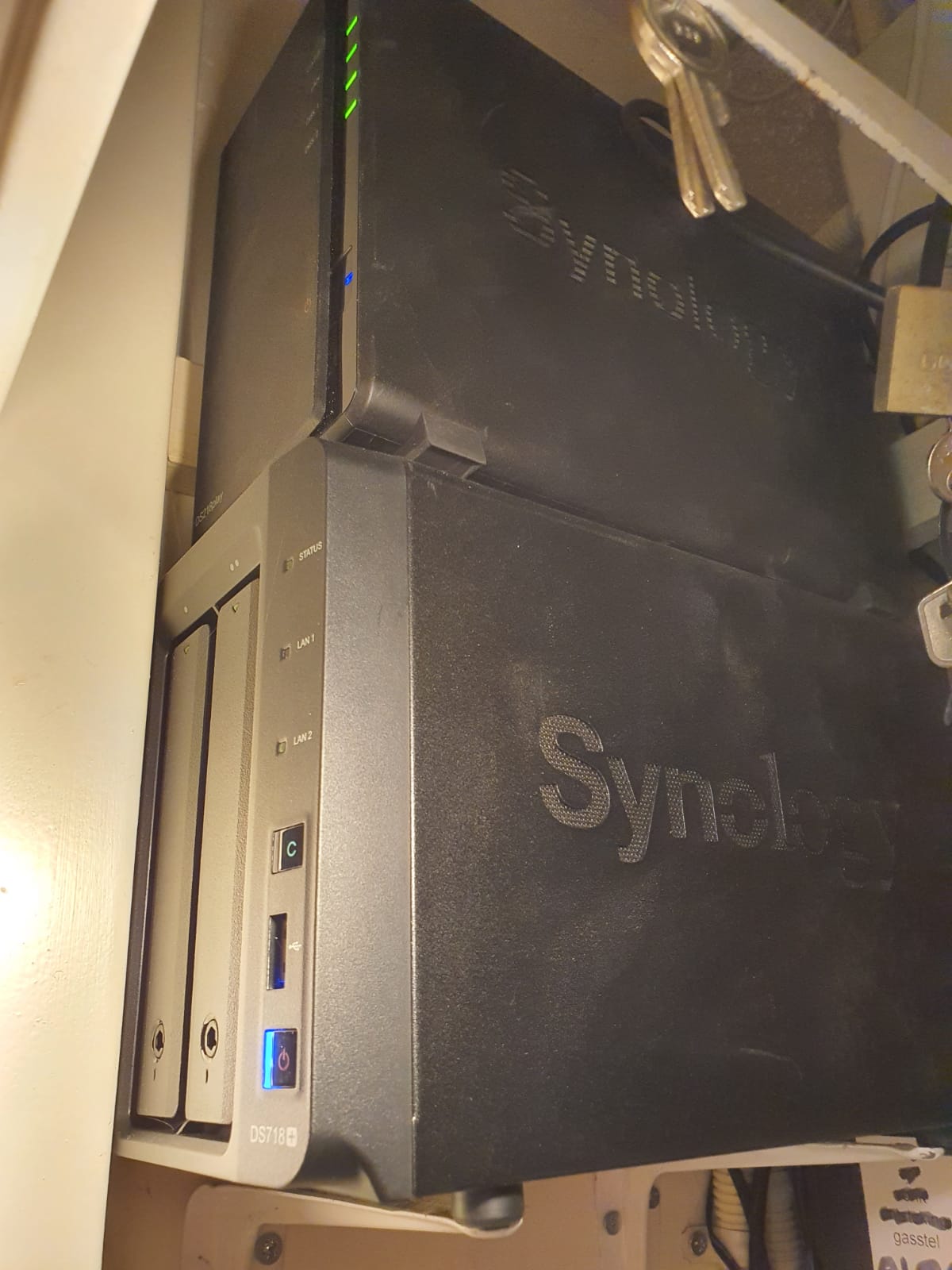
HOMESERVER: Previously I hosted a few websites from home, on a Zyxel NAS with a cheap domain provider.  That all worked fine then.  Based on my previous experience I have bought a Synology DS718+ web server, a few fast SSDs with mirroring in it and up to RAM.  The cost is about 800 Euro.  As a backup I have a DS218 play with a couple of big harddisks in it and extra RAM as a normal local NAS with an extra mirrored wordpress server for emergencies and maintenance on the main server.

So now you see this post from my home server.

My experience is that it is always better to be the only one on your own web server than to rent shared hosting, regardless of the so-called SSD hosting et cetera.  That’s what larger companies do as well: Just a fat server on a fast internet connection.

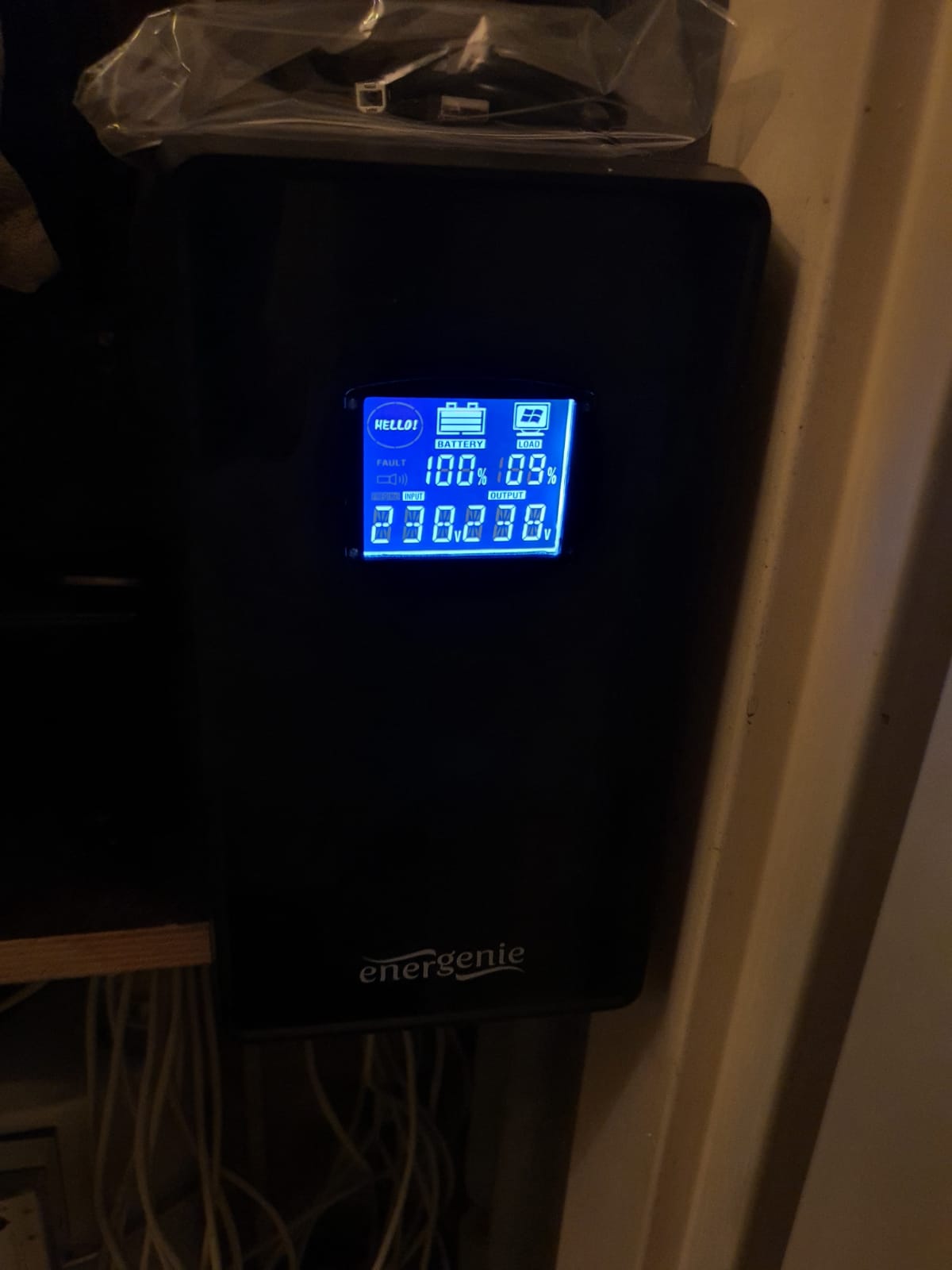
Just to be sure, I do have a backup (UPS) with battery for the 230 Volt power to the internet modem/router and web servers, and a data connection backup via a mobile connection, in case the internet connection goes down. The autonomy of the UPS is about 6 hours.


And… whether I like it?  Actually, I’m mostly very happy with the merging of my various sites into 1 overall site because of its clarity.  Because of my diversity of interests I had just too many sites running which resulted in insufficient attention on the sites.  Now that I only have one for my hobbies and one for my business everything has become much simpler.

And how to proceed? I will cancel my webhosting and I have to see which domains I want to keep.  That also depends a bit on the costs.  If only the costs of the domains are not too high, I can keep 6 or so. Which I then redirect (fixed, 302) to my home server.  Eventually only 1 domain will remain, but which one should that be…?  And then I can make my URL unambiguous again!

That’s it!

Citroen ID/DS 1970 front door repair with new door box inside and outside half door plate DIY with description and photos

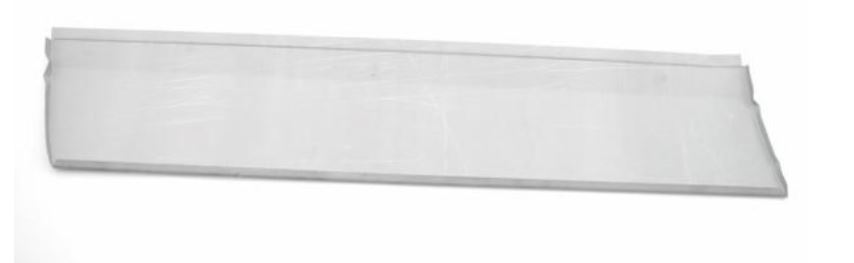
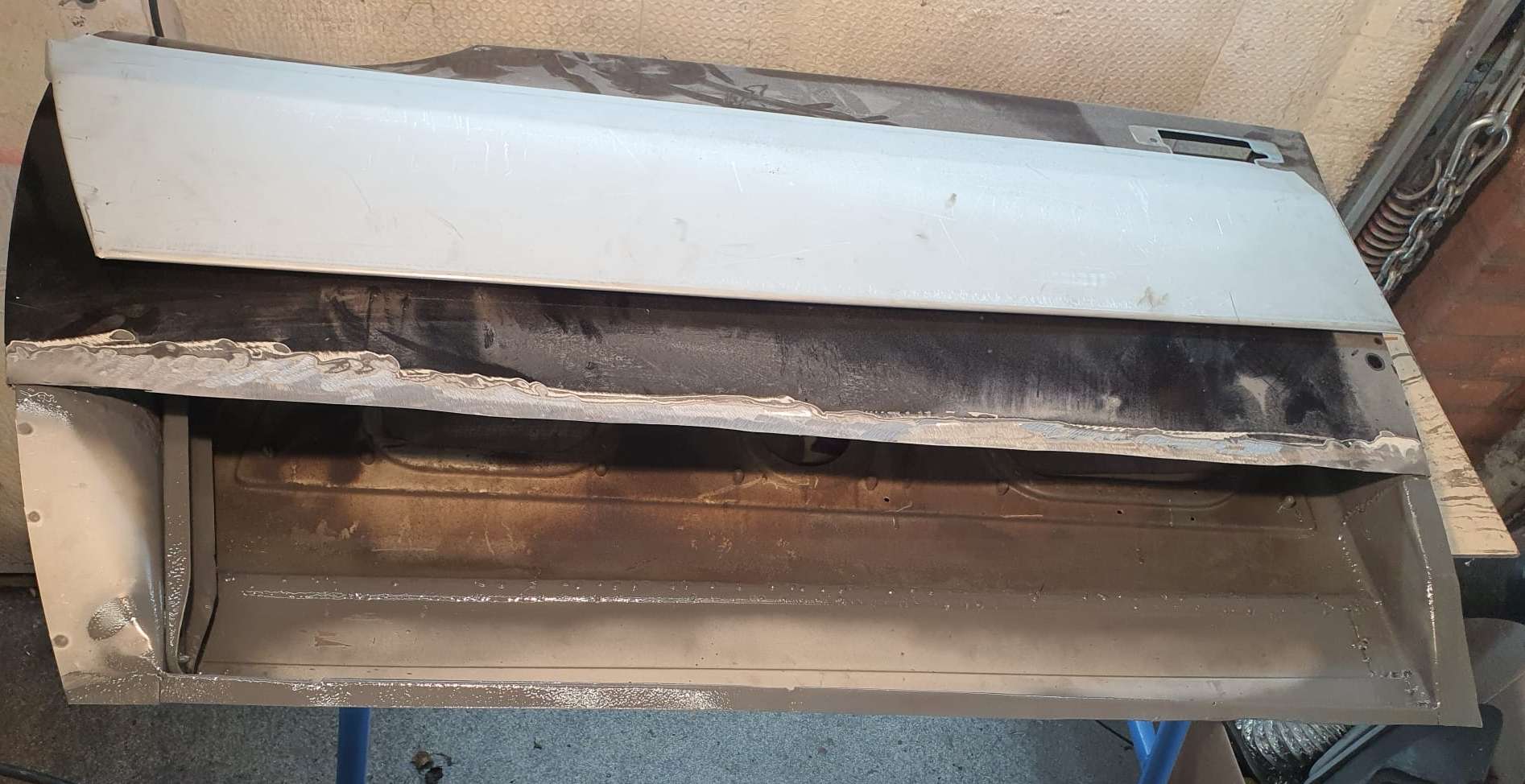
2021-09-24: This morning my new sheet metal ordered from Cit’art for the left door of my DIY Citroën ID/DS 1970 convertible was delivered: A half door plate and a 3-piece inner tray.

For my ID Berline, I’ve previously fitted doors with new half outer plates and door trays a few times so by now I know roughly how to go about this.  Because the Citroën ID/DS has not been very dimensionally stable over the years (understatement!), there is one thing you should always remember: Always fit the tray and then the door plate AT THE CAR and don’t make it all pretty on the workbench only to find out later that the door doesn’t fit!

I might be going a bit far as most people assemble the door body on the workbench and then place the half door plate on the car, but I first align the door body properly using the removed plate as a jig and then weld the new door body in place with a few dots.  Then fit it to the car, possibly aligning it with the hinge points attached to door and car so that the top and side top and middle are perfectly between front screen and rear door/ Perfect means here: In the same place as BEFORE this action.

If everything is as desired, also try it on with the door plate.  If something doesn’t fit, measure the difference in height or depth and remove the door.   On the workbench: Loosen the welds where necessary and correct what is needed. Place the door back in the car and repeat previous steps until everything fits perfectly.

Another important tip: The side pieces of the turret can be placed in different ways: On the intermediate plate, under the intermediate plate or partially under and over it.  I now choose to make the side pieces fit exactly to the door and NOT weld any plate at these side pieces on top of each other.  That means you won’t see a transition when you open the door.  I like that better and it gives less chance of rotting in the future between the places where sheet overlaps.  There’s always going to be moisture in between there.  By the way, I did have the half door plate and the tray intermediate piece cross over where these plates are welded to the old door.  This also has to do with sturdiness, but it is also almost impossible to finish neatly when you don’t want the overlap.  Moreover, you can easily seal this overlap with special seam sealer.

The pictures speak for themselves!

UPDATE 1-2022:

I finally made time to complete the welding on the left door mid of January, 2022.  First, I put the electric heaters in the garage on for a couple of hours, and then I welded the inside part of the new plating fully to the inside of the door.  I also welded tags every 3 cm on the seem in the inner part of the door. After this, I grinded all down so it will later be invisible, at least on the inside of the door since this will not be covered by anything.

Then, I put the door back in the car, put a lock in and set the door at the correct height- and depth.  Then, I fitted the outer plate on the door and adjusted the cutout and the inner angle of the plate I earlier welded on the inside.  Also- the sides were adjusted and I ended up cutting some 4mm from the rear plate’s lower horizontal part.  The outer parts was just too low for about 4mm. I also had to get 4mm off the cutout of the existing door plate.

I took all parts off that were in the way or made the new plate stick up.  Then, I spotwelded the new plate at its final position.  After this, I took the door with spotwelded plate out, put it on the welding table and used spotwelds every 5cm (2inch) at first, cooling the welded work with compressed air and moved on to slowly weld around until everything was closed.  Then, I tapped the edges at the bottom, left end right around until it almost closed (used thin sheeting to prevent them from getting too tight).  Grinded the weds nicely off, all aound and putthe sinc spray everywhere, including inside the door.

Remounted the door and it all fits beautifuly.

Some mudworks still to do, but that’s all for later!

Welding tip: I use a Gebora 160 MIG machine with 0.6mm wire and mixed gas.  I use the following settings for spotwelding: wire speed to 6 and power is set at 2, that is the 2nd position of max 6.  I found that spotwelding sheet metal when oe of the sheets is around 0.6-0.8 mm,, the setting of power 1 is just not enough to get a spotweld that sinks a bit in, I always get uplifted welds, also if I lessen the wire speed.  But- at power 2, all goes well.  Welding the Citroen’s plating can, however, NOT be done at position 2.  That burns right through the thin plating.

Actually, that is the main reason I always use a bit thicker repair plate so I can at least make decent connecting welds.  You do have to start the spotweld from the thick plate and then move gently just towards the thin palte and stop.   There’s just no other way to do this, imho.

Now, the welding is done. I also welded the connecting hooks of the front fenders already with new connecting pieces for mounting onto the chassis and that also turned out OK.  Next chapter will be the finishing towards 2K primer, sanding and hopefully also painting!

[Best_Wordpress_Gallery id=”71″ gal_title=”Front door repair Citroën ID/DS 1970″]


MACH-3 integrated driver board USB-CNC-MDK2

My main supplier of parts is Aliexpress, and I also buy a lot from Banggood.

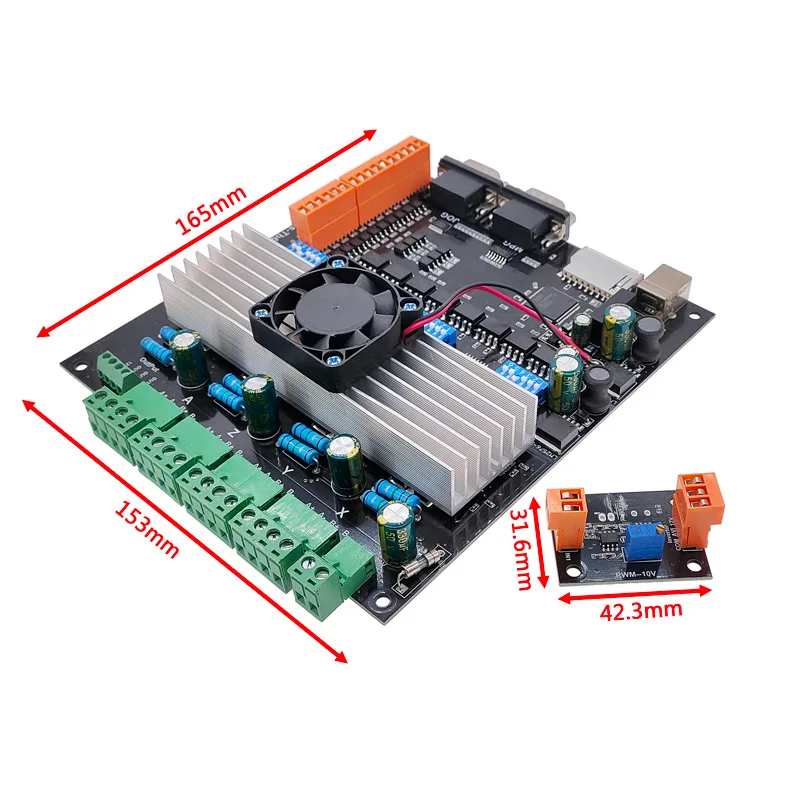
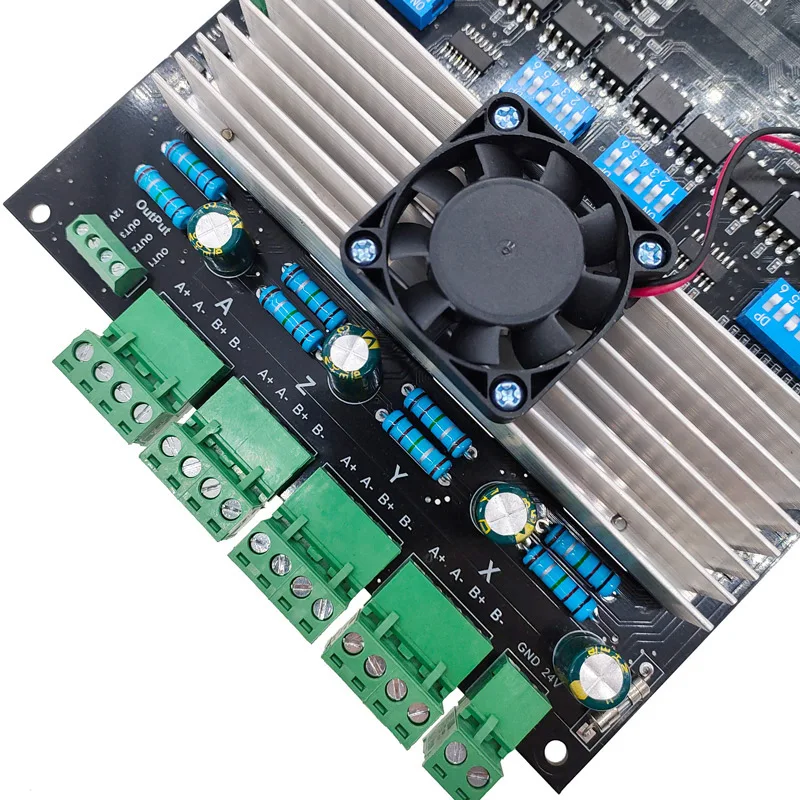
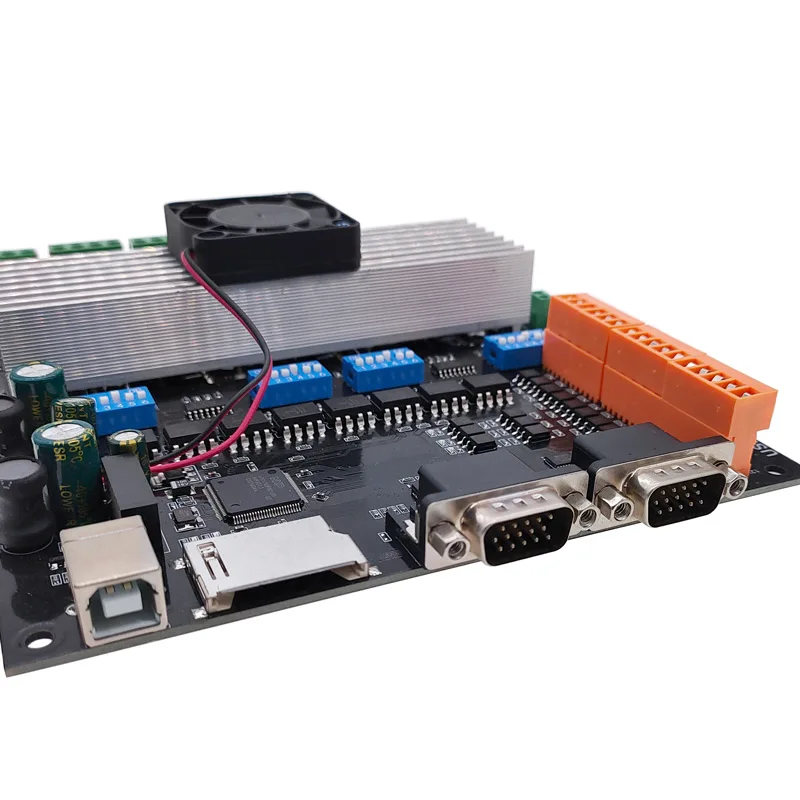
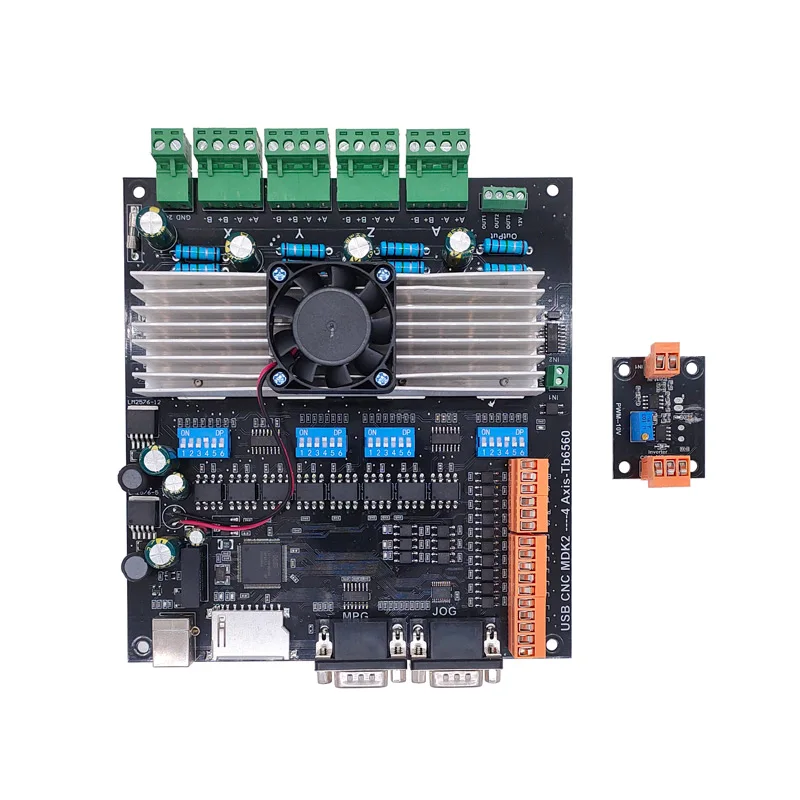
At Aliexpress, I recently discovered a board that will interact with Mach3 and has onboard drivers for larger stepper motors like Nema23.

This board takes 24 Volts,  has a USB connection to the PC, an SD card slot and 2 x MPEG/control connectors 15-pin/3-row.

I ordered me 1 of these boards to test it on my CNC mill:

Usb Cnc MDK2 4 Axis TB6560 Stepper motor Controller with Mpg Interface 100Khz Driver Breakout Board

I have this tested with Nema23, 24 Volts and the accompanying firm- and software.

It was quite some puzzling to get the drivers installed and I discovered I had to switch off the Windows 10 security feauture that prevents unsigned drivers to be installed.  You can set this off via a procedure which restarts your PC via a series of keyclicks and restart options in the Windows menu. It can all be found on the Internet.  After this, the board worked perfect.

I also bought a handwheel set, which has a male 15 pin VGA connector, as does the board.  I ended up ordering me a female-to-female 15 pin VGA unit from Ale, will see if this works.

The other 15-pin connector (also male) can be used for simple switches to direct all axes up/down or forward/backwards.  I will use this to make auto toggle swtches directly at the machine, next to the Nema steppers.  I have some nice jogging handles that will fit perfect for this.

Also, I bought e a 4th axis unit hat will get connected to this boardon the Minimill.

chicun

4

5

6

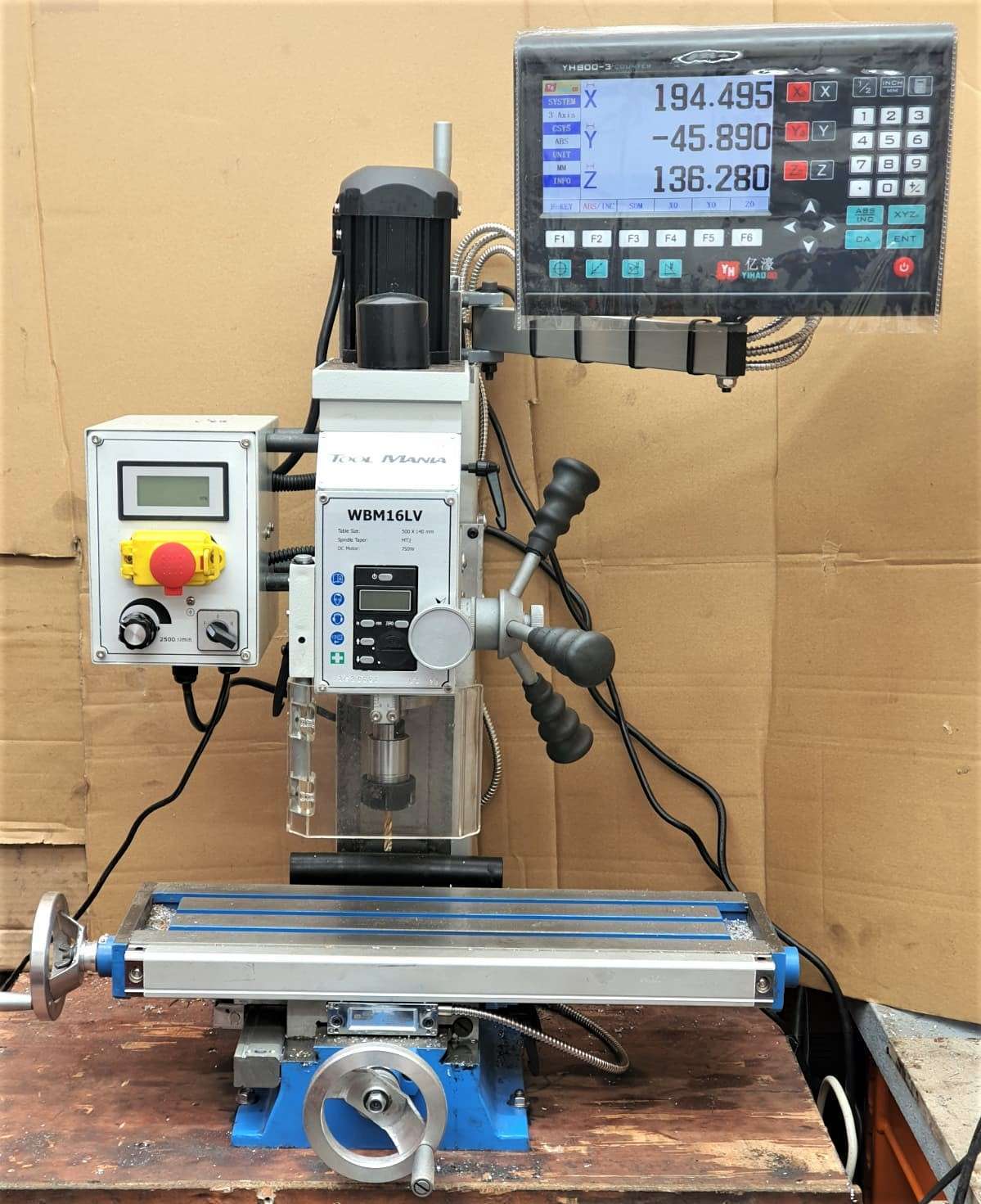
Toolmania WBM16LV Mill with X-Y-Z1 en Z2 reading

GO TO MY CNC CONVERSION PAGE

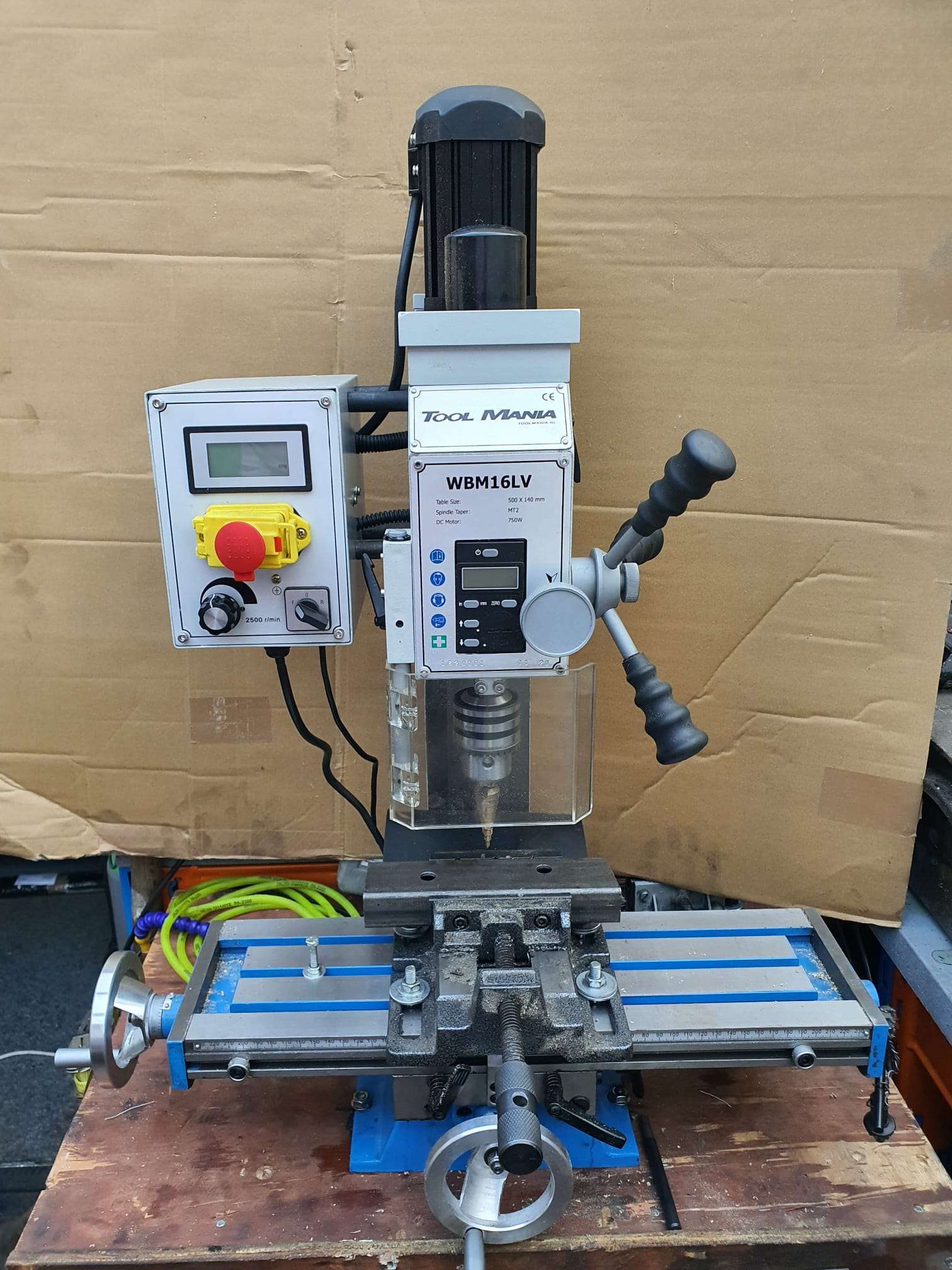
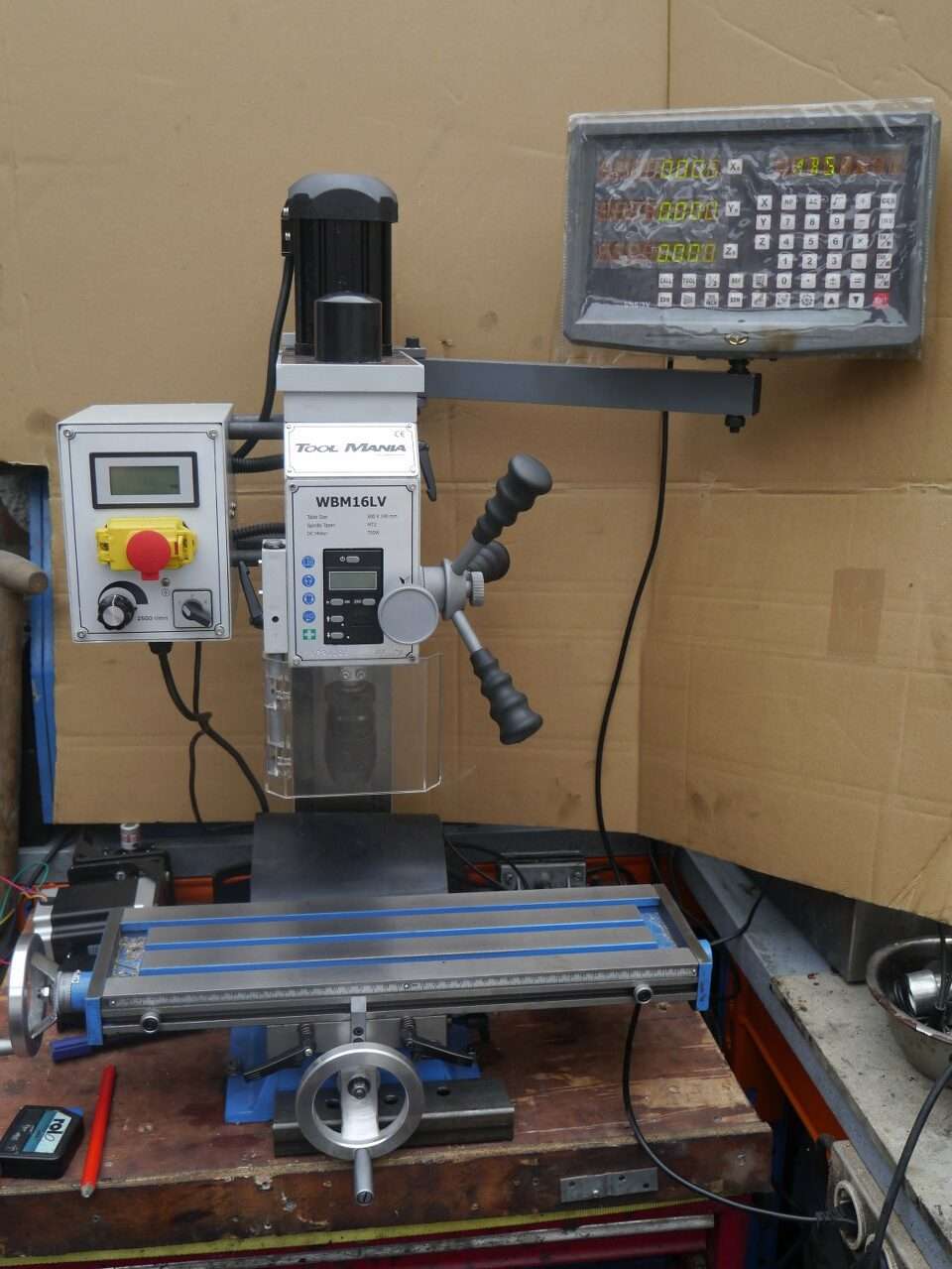
So, after a long search I finally replaced my very old column drill for a small model column mill from Toolmania.  I had the last one still available from this series.

The old drill -)

It is a model WBM-16LV with an indirect belt-driven spindle with a 750 watt vario motor.  Even at low rpm there is still quite a bit of power on the motor.

This model is actually largely a standard model but with a more powerful motor, with a small LCD for the Z-movement of the 50mm Z-handle and with a wider bed.

The working space with this column router is: X:330mm , Y:140mm and Z:180mm

The spindle has MC2 inclusion with a pull/screw of 10mm.  With this, at least a cutter, drill or head will never fall out.

Toolmania’s standard delivery of the WBM16LV, in use with a drill bit in the drill head supplied as standard and a piece of iron in the clamp
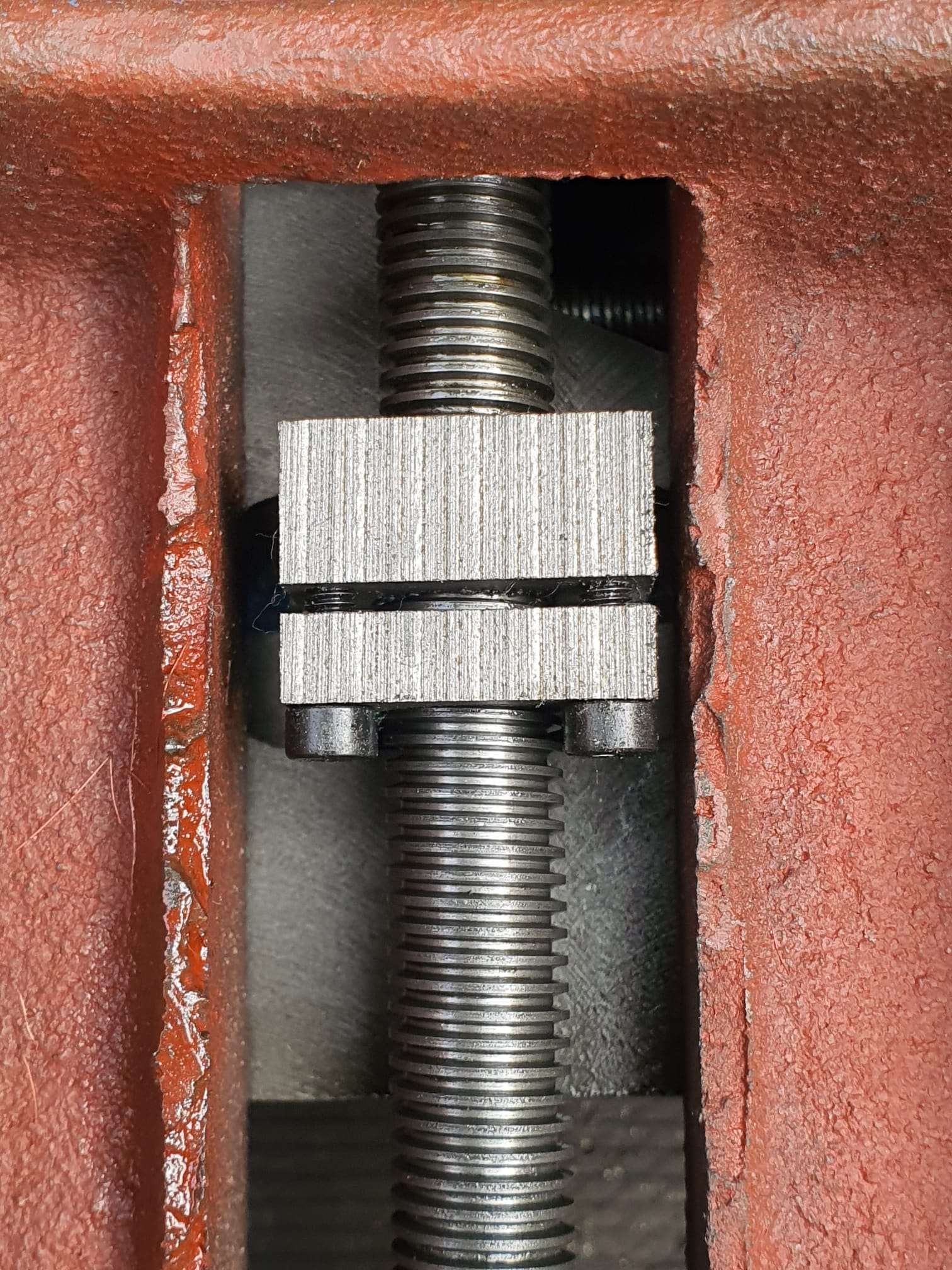
With the two screws you adjust the play. Not too tight and just loose enough to turn smoothly without play. Adjustment can always be done later, when needed.

In addition to buying tools, I always notice that you need at least the purchase value of your tools in consumables and additional tools.  No different for the mini mill.  The glass scales, collets, milling cutters, CNC conversion, gas spring, holders for the table, indexer and so on together cost much more than the cost of purchasing the column cutter.

I immediately replaced the standard 1-16mm rack and pinion drill chuck that came with it with a standard 1-13mm manual-open chuck.  But really, I only work with the fixed spindle heads, collets, and the fixed sockets for both milling and drilling.

The associated stuff like an ER-25 collet holder with 15 collets, boring cutter MC2 and so on are from HBM.

You can see nicely here the X-glass ruler, mounted in front of the X-slide. The X transducer is mounted on the Y slide.   On the left below the bed, you can see the Y-axis glass ruler mounted on the base of the mill. To its left (out of sight) is the Y transducer mounted with a bracket to the Y slide.

The table has been adjusted for play on the X and Y axes.

The vertical column has also been adjusted for play, and screwed very tightly again.

Besides the conversion to CNC I have mounted 3 glass scales of respectively 170 (1x) and 370 (2x).  Because my old display module didn’t work with the ordered glass channels I ordered and mounted a matching new module, this one works with an LCD.

The mill with the OLD display module

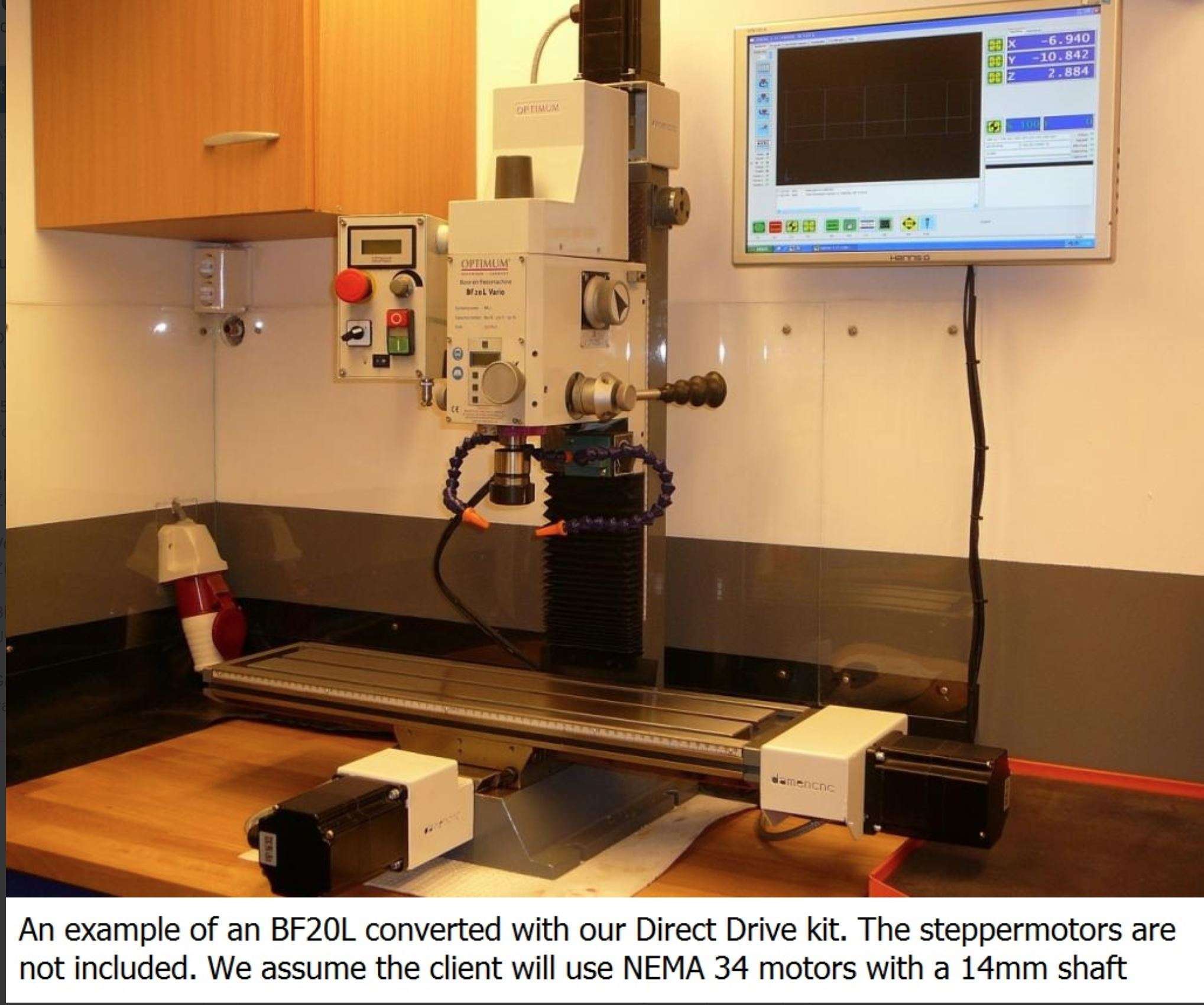
For converting the column router to CNC, I have already prepared everything and ordered all the stuff I don’t have in stock.

The column router will be used mainly for milling keyways and occasionally some milling work on ball bearing housings and the like.

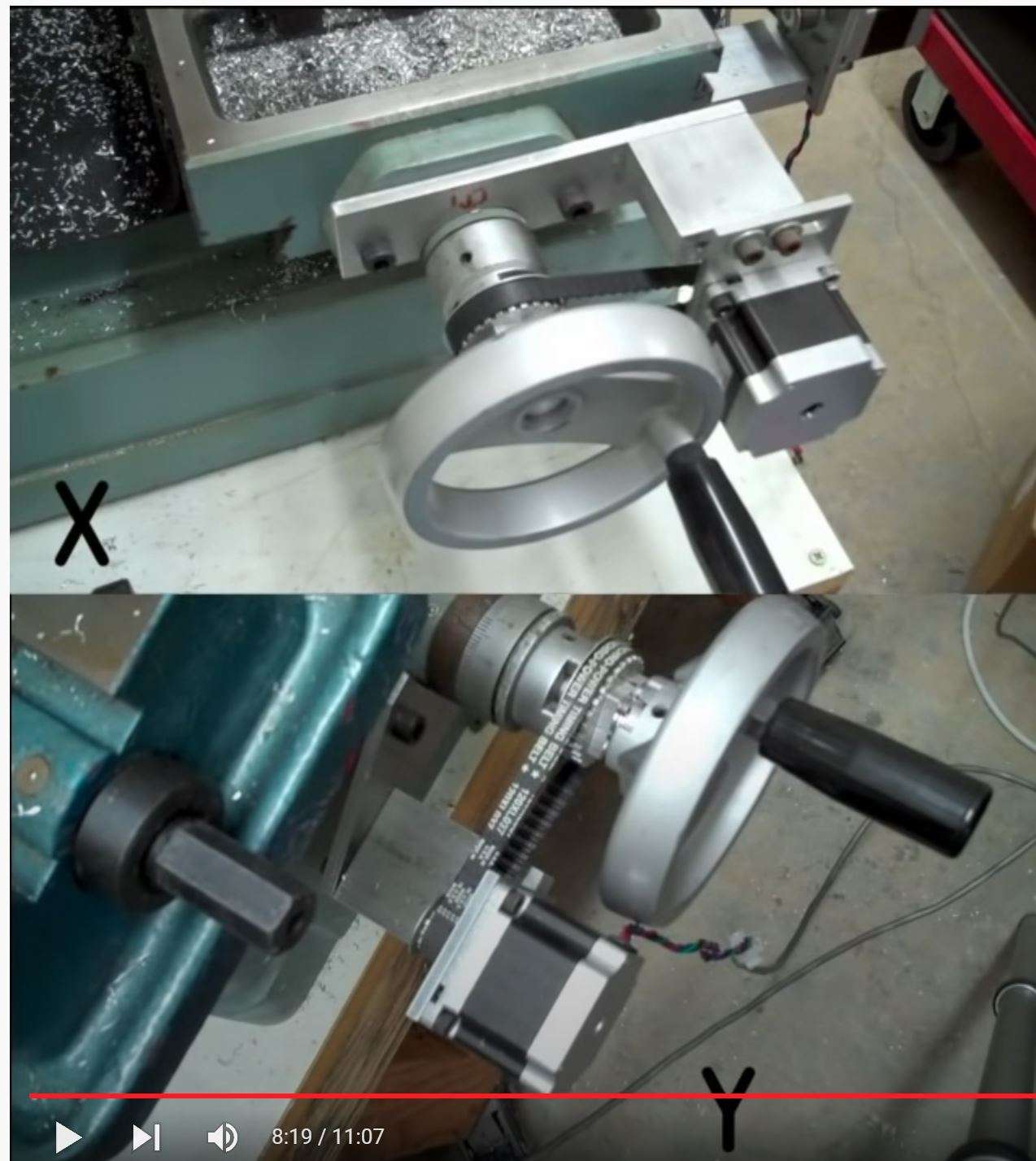
The column cutter will also be used for drilling and occasionally for aluminum milling, and then a CNC setup is useful.  The CNC setup will be identical to my Indymill.  It will have Nema23 stepper motors with 1:2 belt drive for X and Y and 1:3 drive for the Z axis. I am going to try to merge the handwheels with the gears and then reuse them so that it remains possible to operate manually. The electronics will again be wifi-based with Duet web-based controller and a cloned motherboard from Mellow (FLY) with 2209 stepper drivers.

The limit switches will be inductive: 2 pieces for X, 2 pieces for Y and 1 for Z-top.

The Z-min (or Zero) will be a probe module for the toolbit, which can be put in a fixed place on the table.  It would be nice if the column could be electrically isolated from the spindle so you could really do the zero setting on your workpiece.  I’m still going to figure that out.

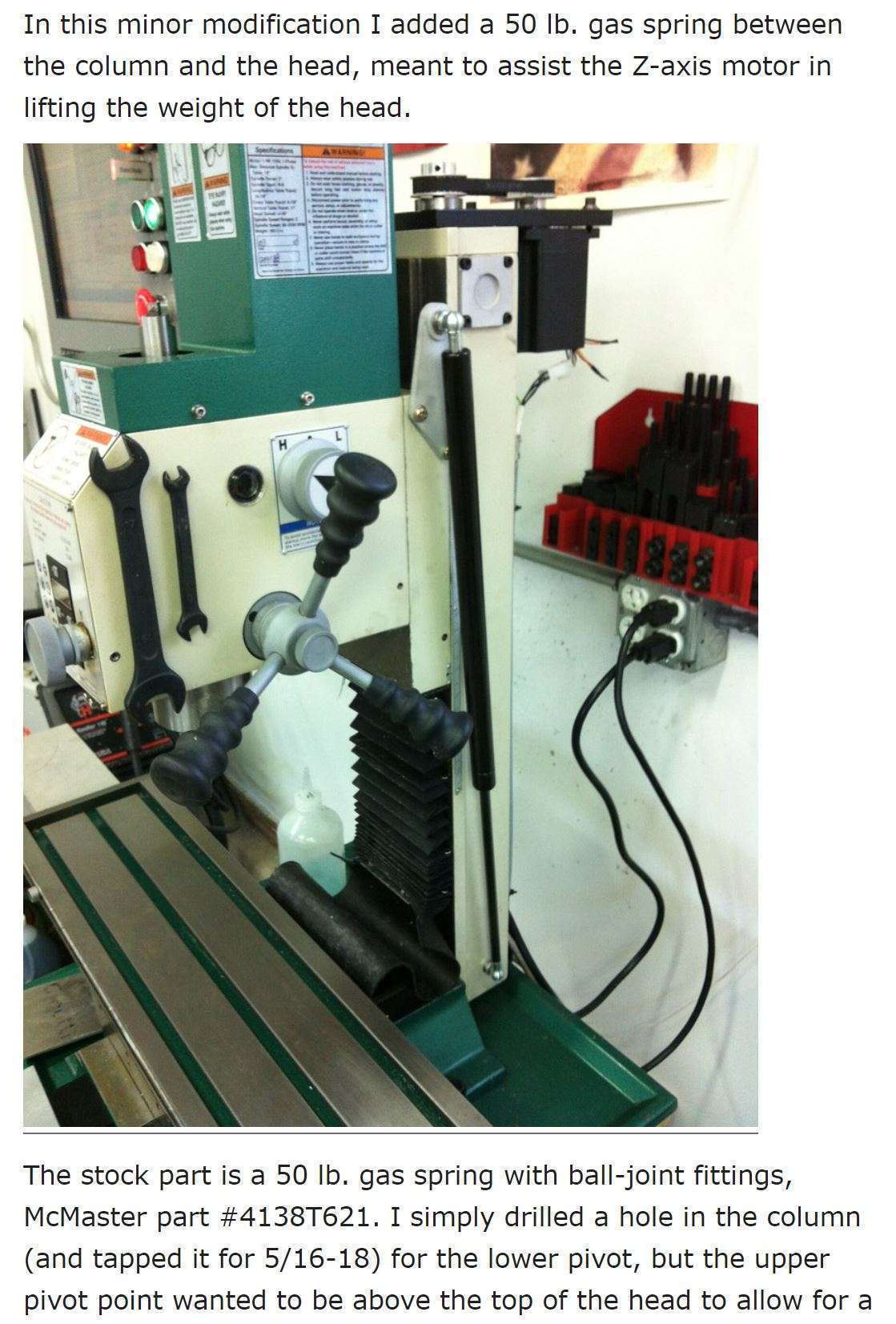
For the Z axis, I ordered a 600mm long gas spring, with an operating stroke of 250 millimeters so the column can move more easily.

Examples from others for my CNC conversion:

This will be pretty much my own solution, only I’m using 10mm base plate aluminum. And I’m going for Nema23 motors. The setup will otherwise be identical to this example for X and Y.
Dit wordt mijn Z-setup. Een gasveer om de druk op motor en spindle te verkleinen en een vlakke plaat op de top van de kolom met een rieaandrijving en de Nem23 motor. . Ik ga voor 1:3 (72 tands op de spindle en 24 tands M3 op de steppermotor.). Als het allemaal past komt het handwiel weer bovenop.
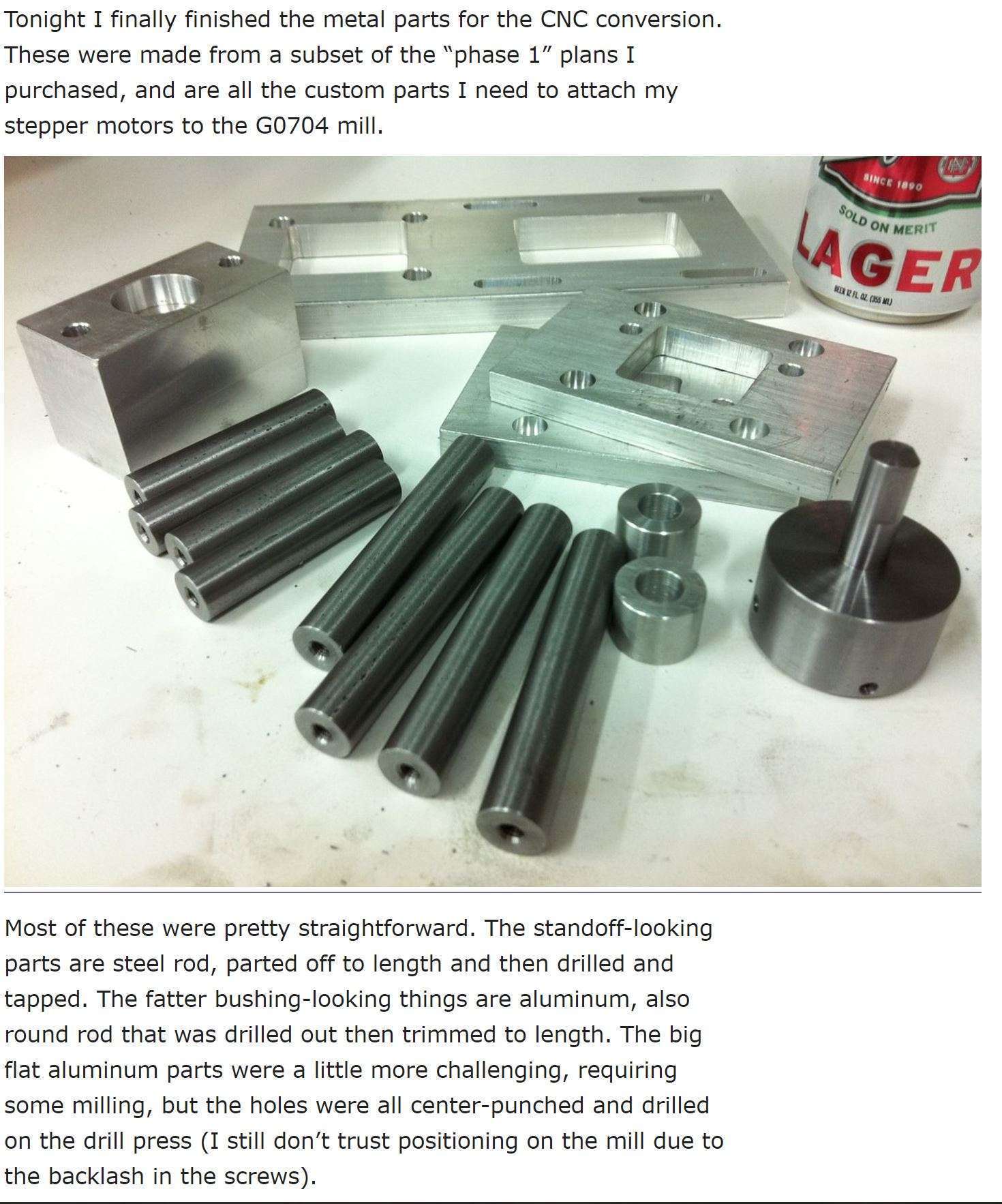
Voorbeeld van de basisplaten met 10mm aluminium.

GOTO the X axis CNC adapter

GOTO the Y axis CNC adapter

GOTO the Z axis CNC adapter

DOWNLOAD ALL MY CNC ADAPTER DESIGNS  as STL, .nc and  OpenScad!

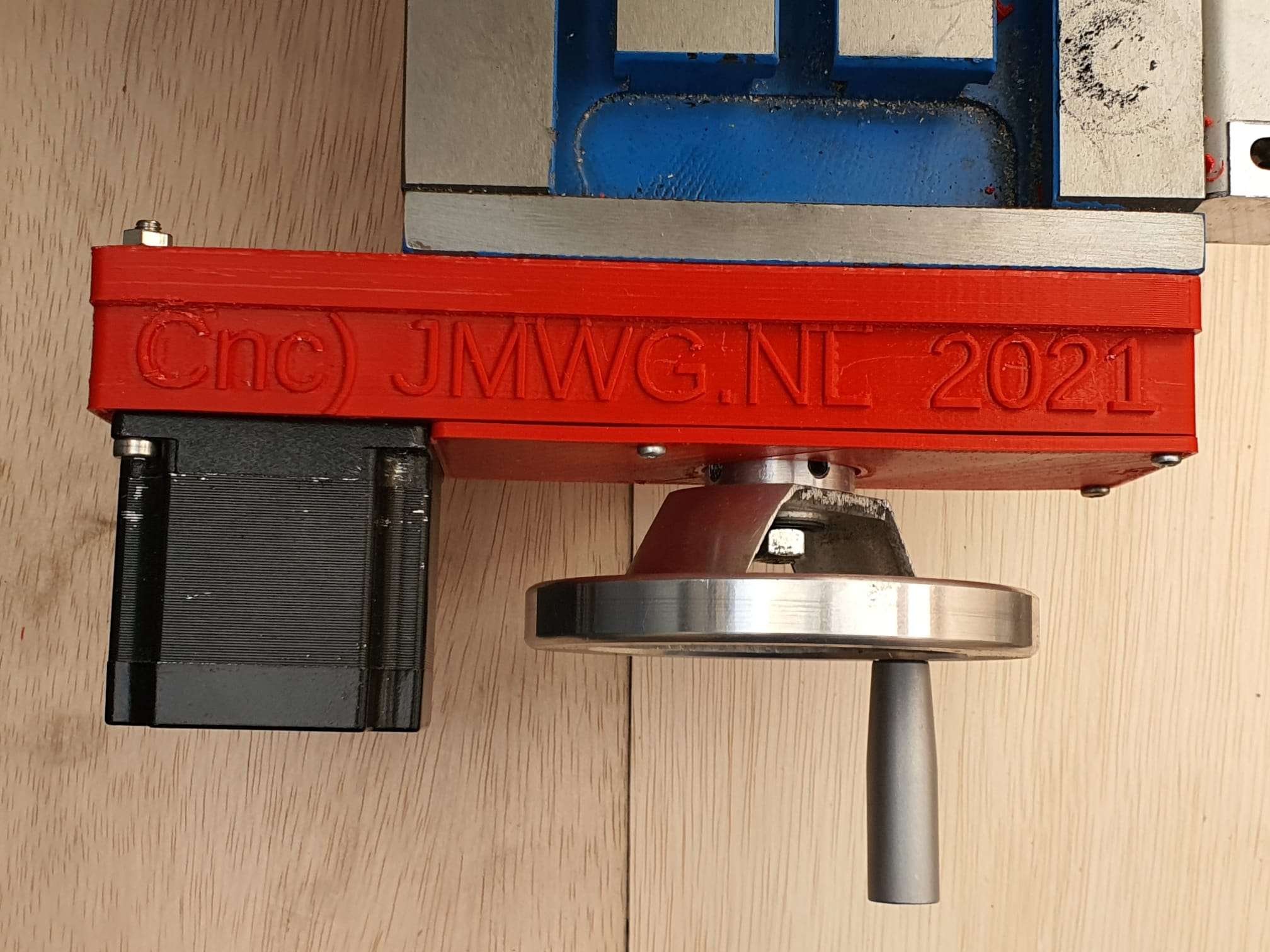
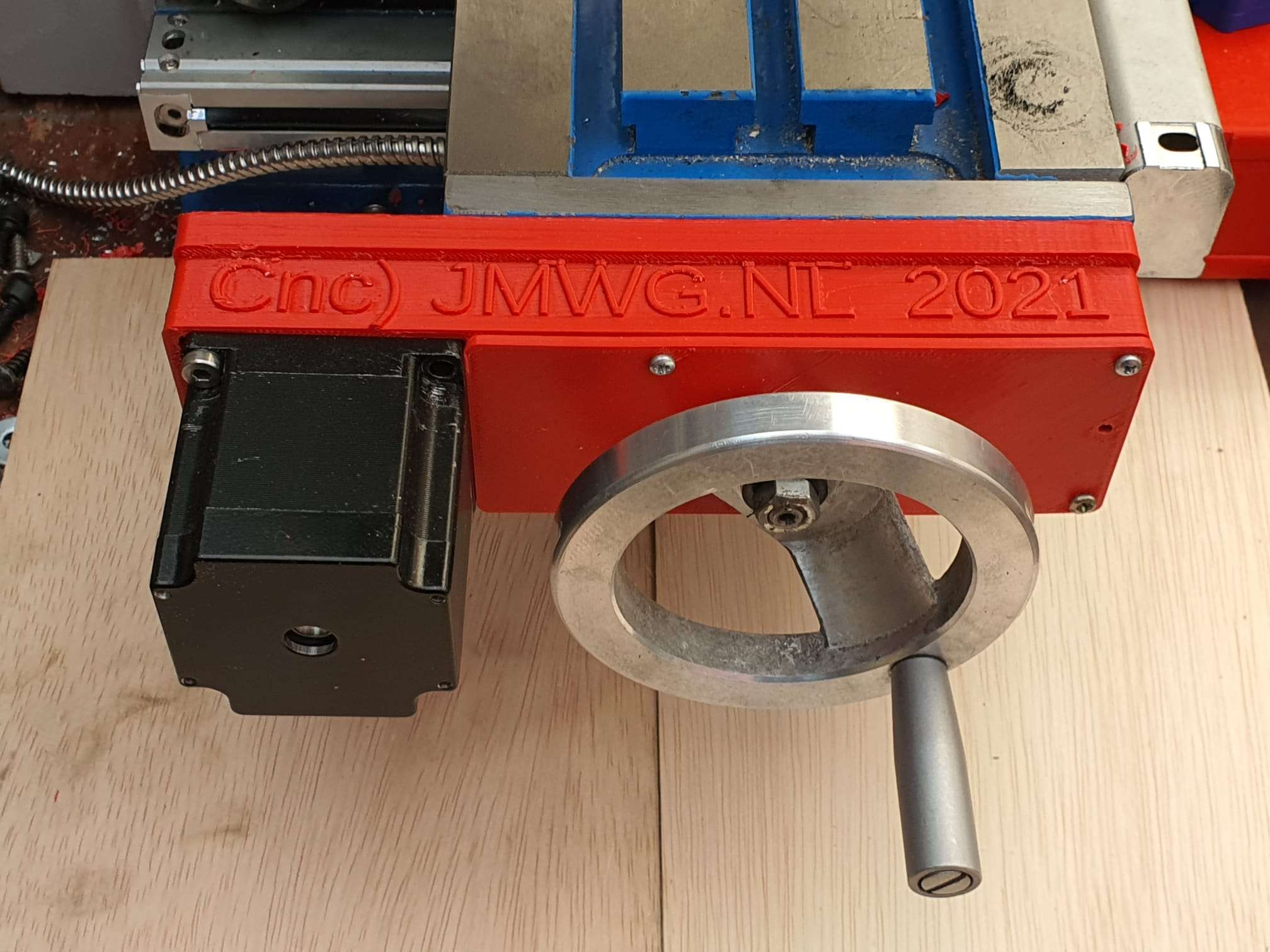
Minimill CNC conversion WMD16LV Y-axis 3d printed adapter for NEMA23 and M3 teethed belt

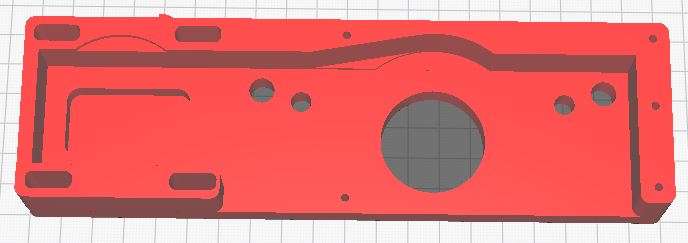
The design for the Y-axis mounting plate for the Nema23 stepper  is shown below and can be 3dprinted or, as I will do after the printed part proves to fit well, CNC it in aluminium on my CNC Indymill router.

The Y-axis adapter proved to be the most difficult design.  It took me 15 trial prints before I got everyting fully optimized.  And I also wanted to have a debree screen with a removable lid, which took some energy to test this.  Also, the belt has to have a clean route where it sits between the wheel.

The physical data for this setup:

  • Nema23 stepper motor
  • 3d printed parts: a: Baseplate inclusing risers for motormount and shield; b: lid
  • Teethed wheel for the Nema23 8mm axle: 10mm wide, 24 teeth M3 with chest
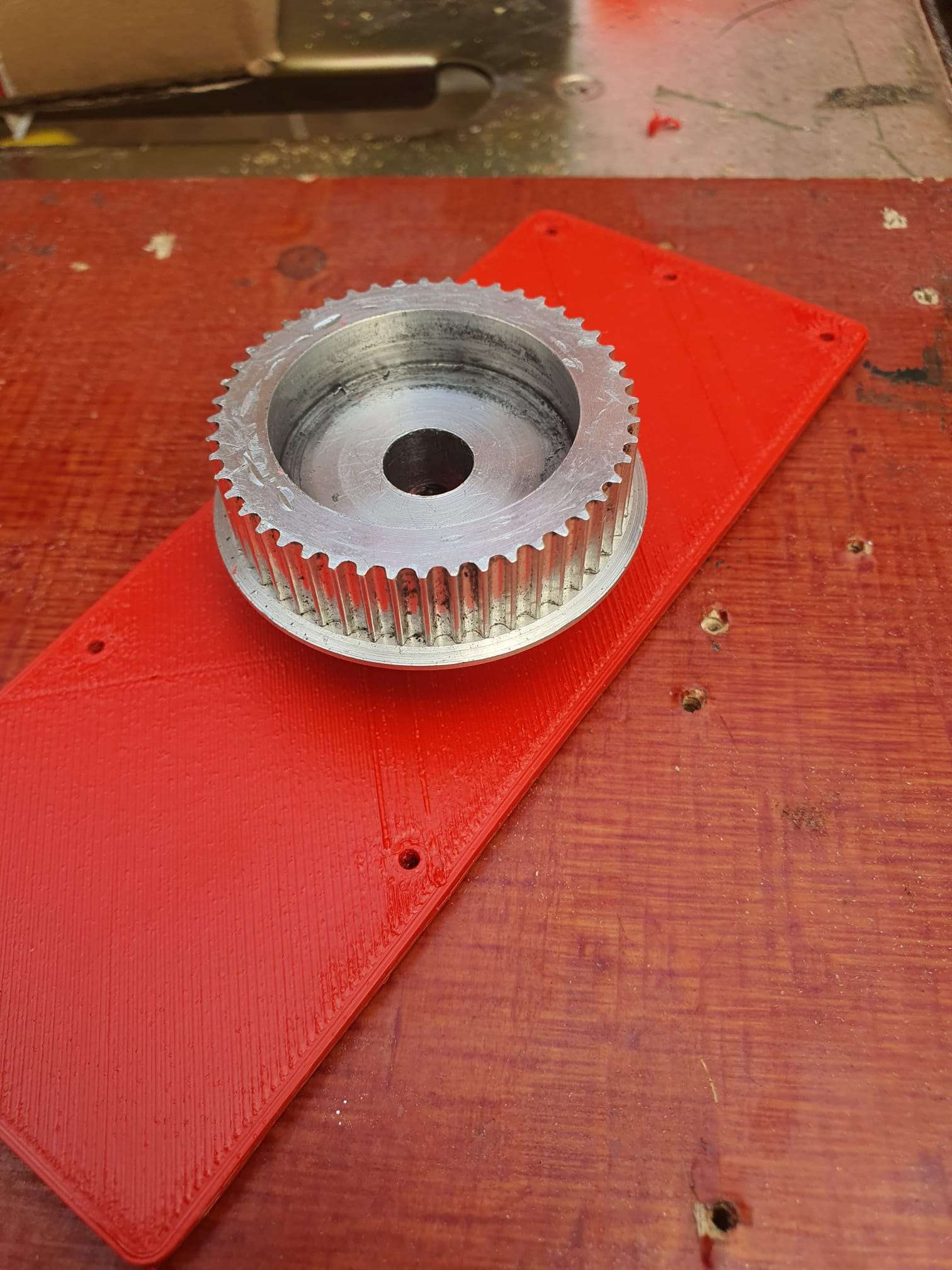
  • Teethed wheel for the leadscrew 10mm axle: 10mm wide: 48 teeth M3 with chest, machined on the teethed inside 9mm depth with a  width of 33 mm diameter to fit the chest of the leadscrew bearing holder
  • The fitting belt is 9mm wide, 300 mm long and has 100 teeth (M3)

GOTO the MiniMill’s X-axis CNC Nema23 mounting plate

GOTO the MiniMill’s Z-axis CNC Nema23 mounting plate

FINAL DESIGN:

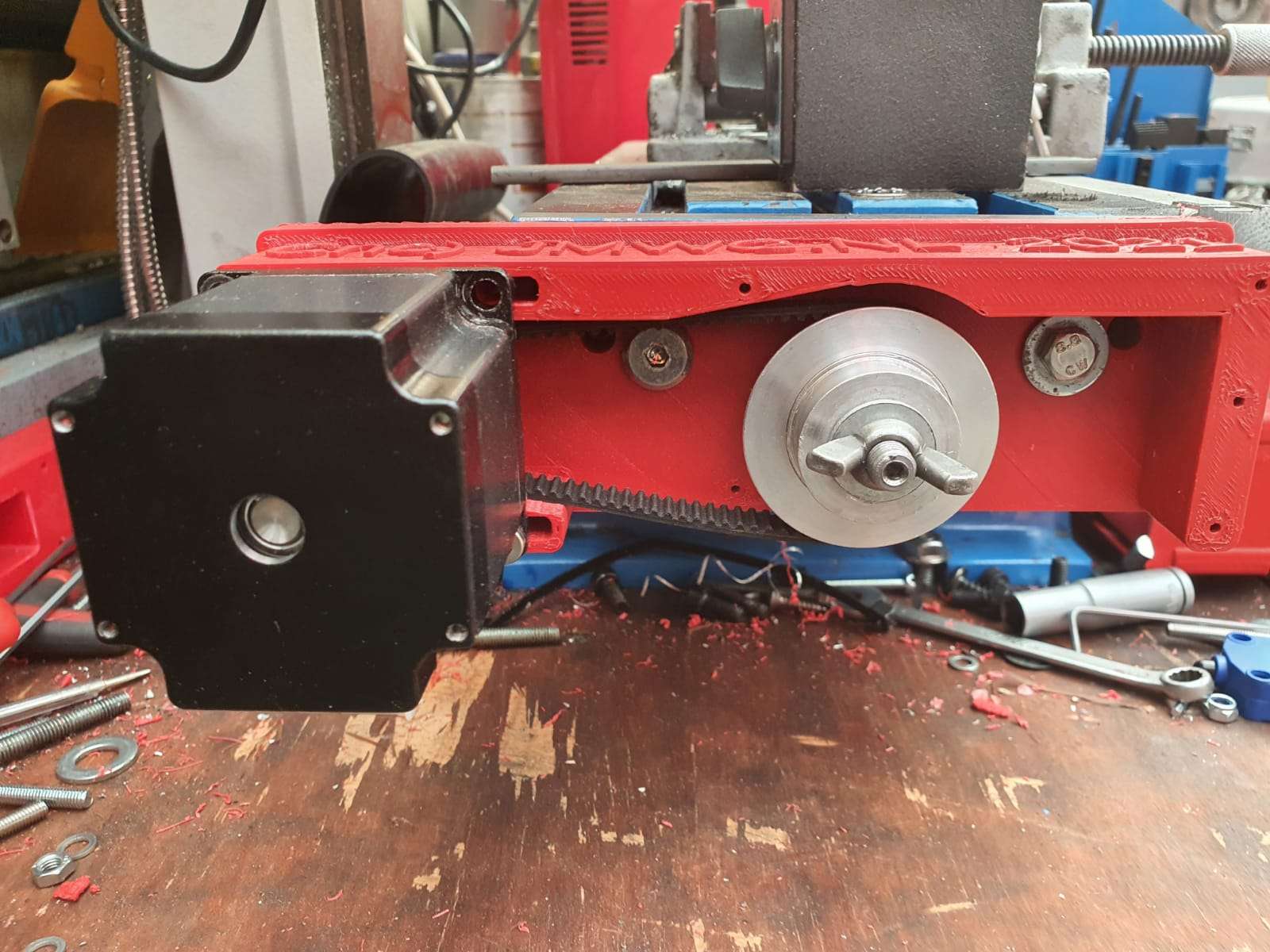
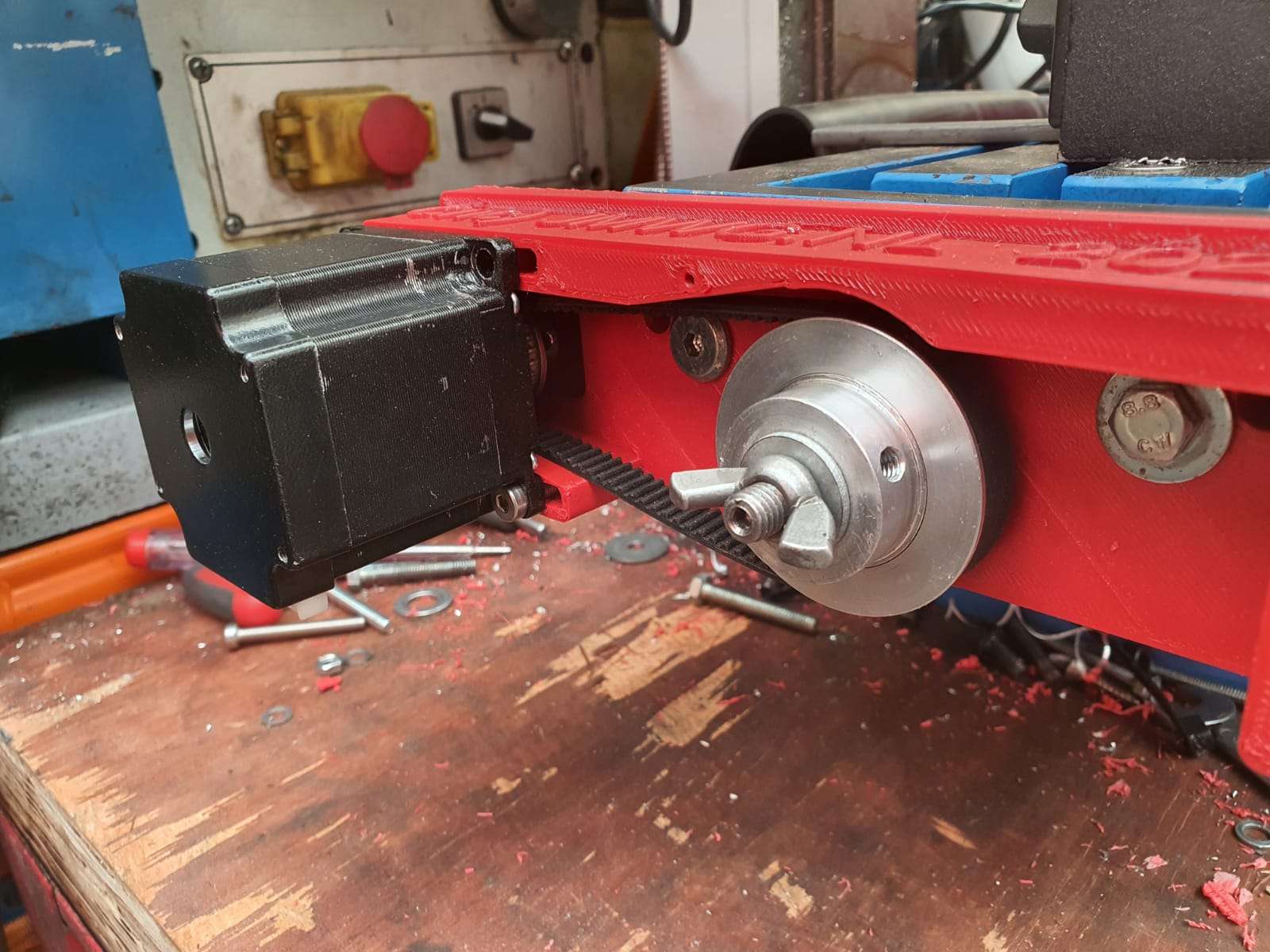
Machined the inner part out on the lathe so it will slide for about 9mm over the Y axis’ leadscrew bearing holder

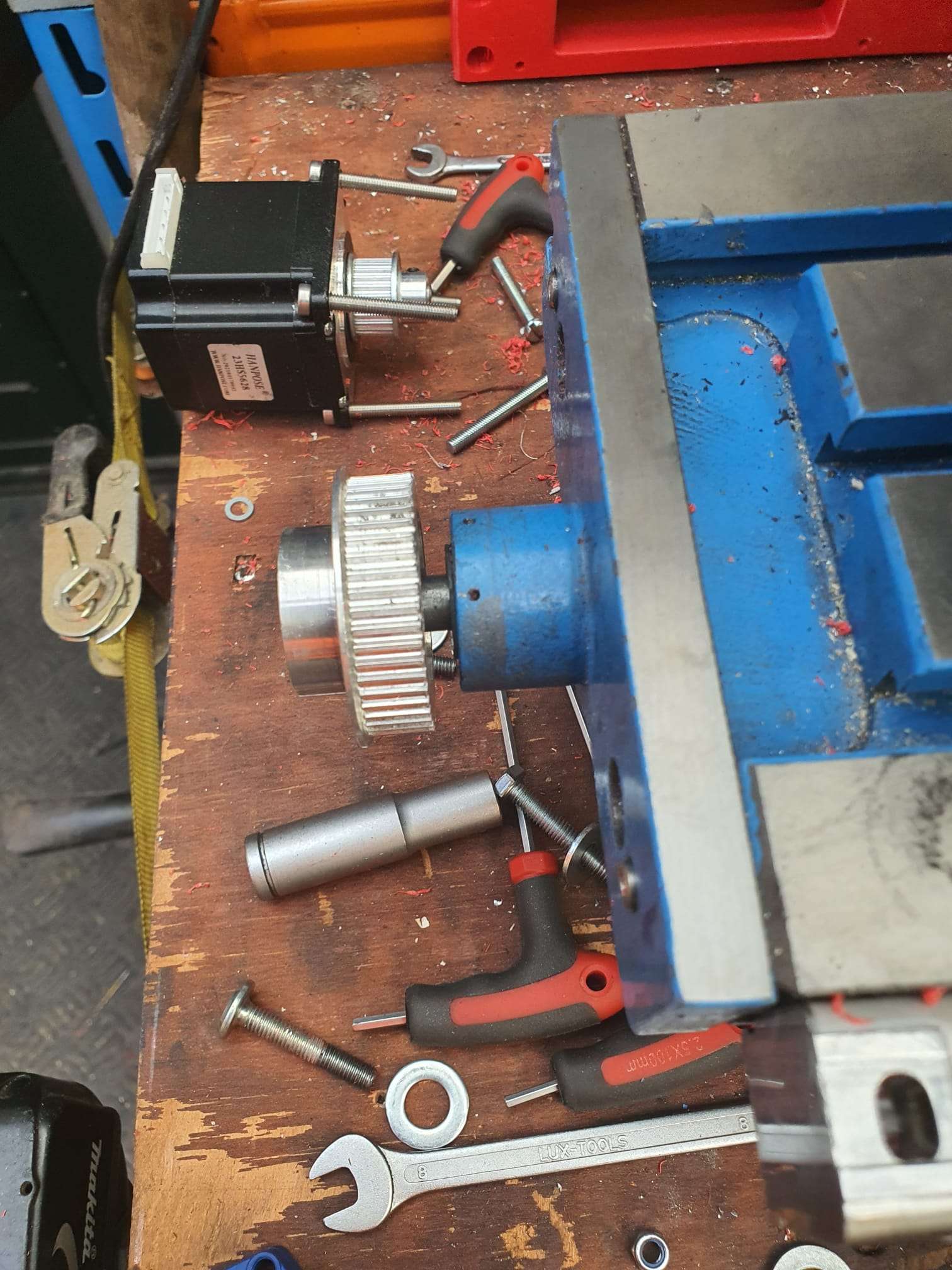
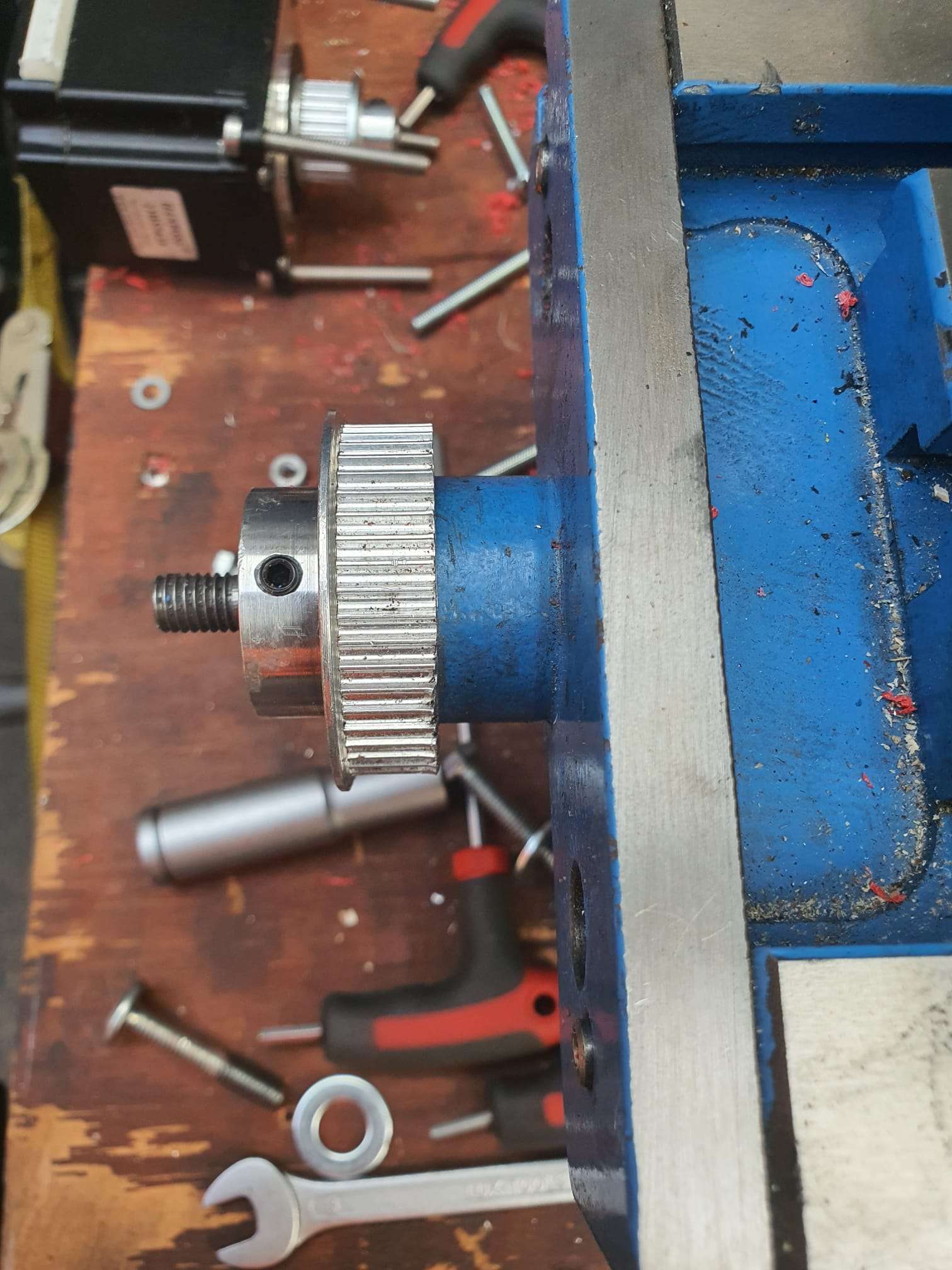
And now the wheel can move over the bearing holder to the right
This saves 9mm mounting space and now the machined handwheel can be replaced, if so desired.  But the handwheel needs to be machined first, to get the dial off.

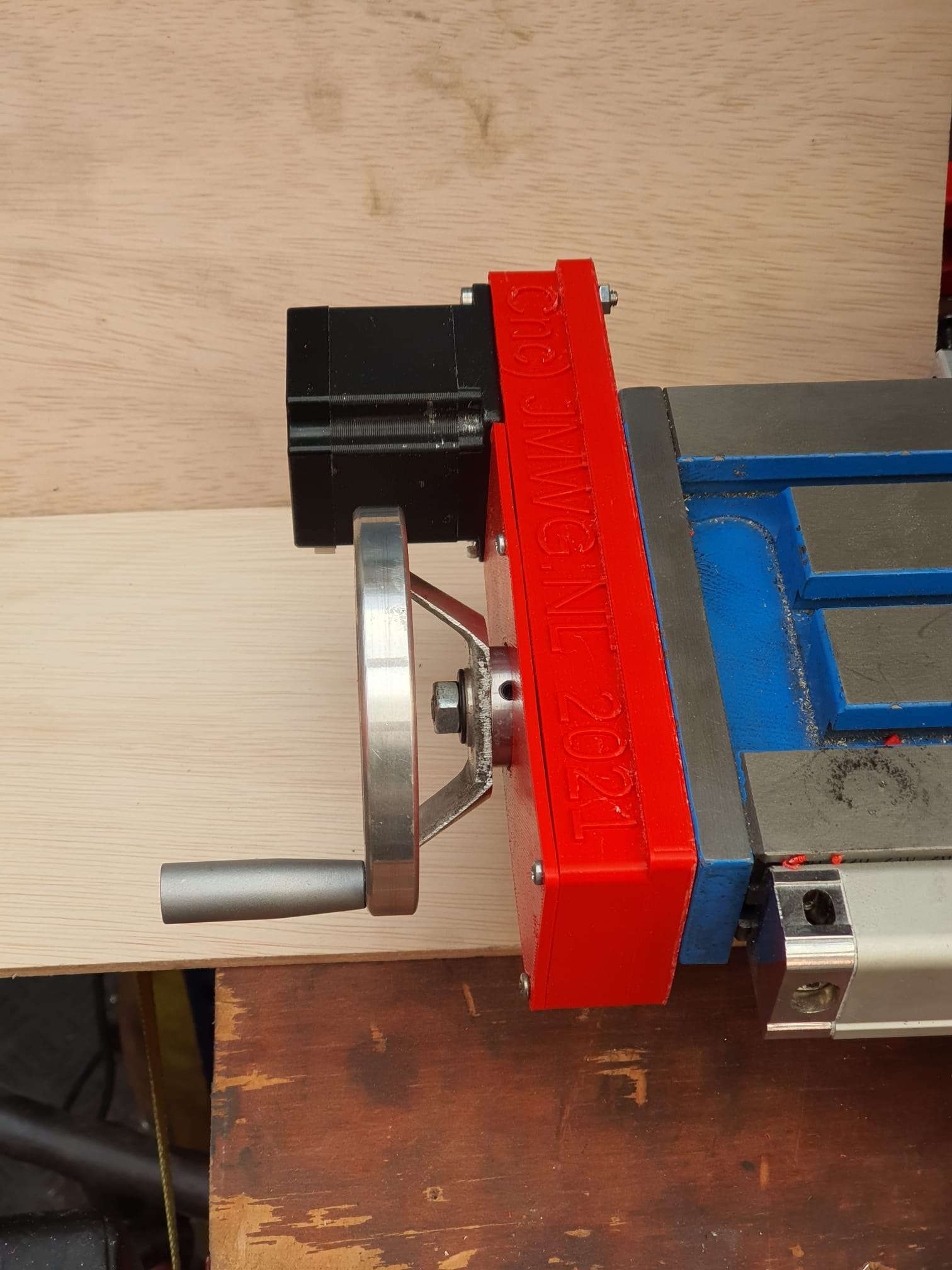
the small holes can be used to place the lid on the debree screen with small 2.5 mm dia screws  Or, you van leave the lid off and put a wheel on as I have done on the Z-axis.  You must machine the dial off the wheel so it gets thin enough to mount on the remaining M8 leadscrew-end.  A little part of the 10mm shaft will stick out  with my method to keep the handwheel centered.

GOTO the X axis adapter

GOTO the Z axis adapter

DOWNLOAD THE CNC ADAPTER DESIGNS  as STL

Please donate $1 to my paypal account if you use (parts of) my developed materials so I can continue to share nice stuff for you to download

Minimill CNC conversion WMD16LV X-axis adapter for NEMA23 and M3 teethed belt

NEW VERSION with debree screen:

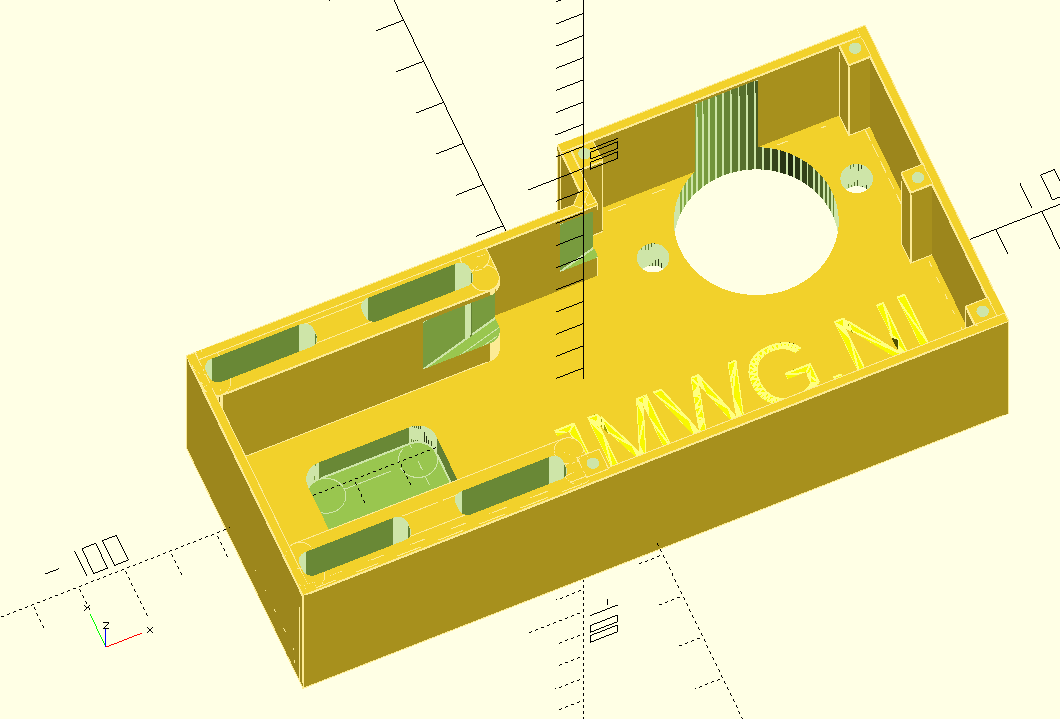
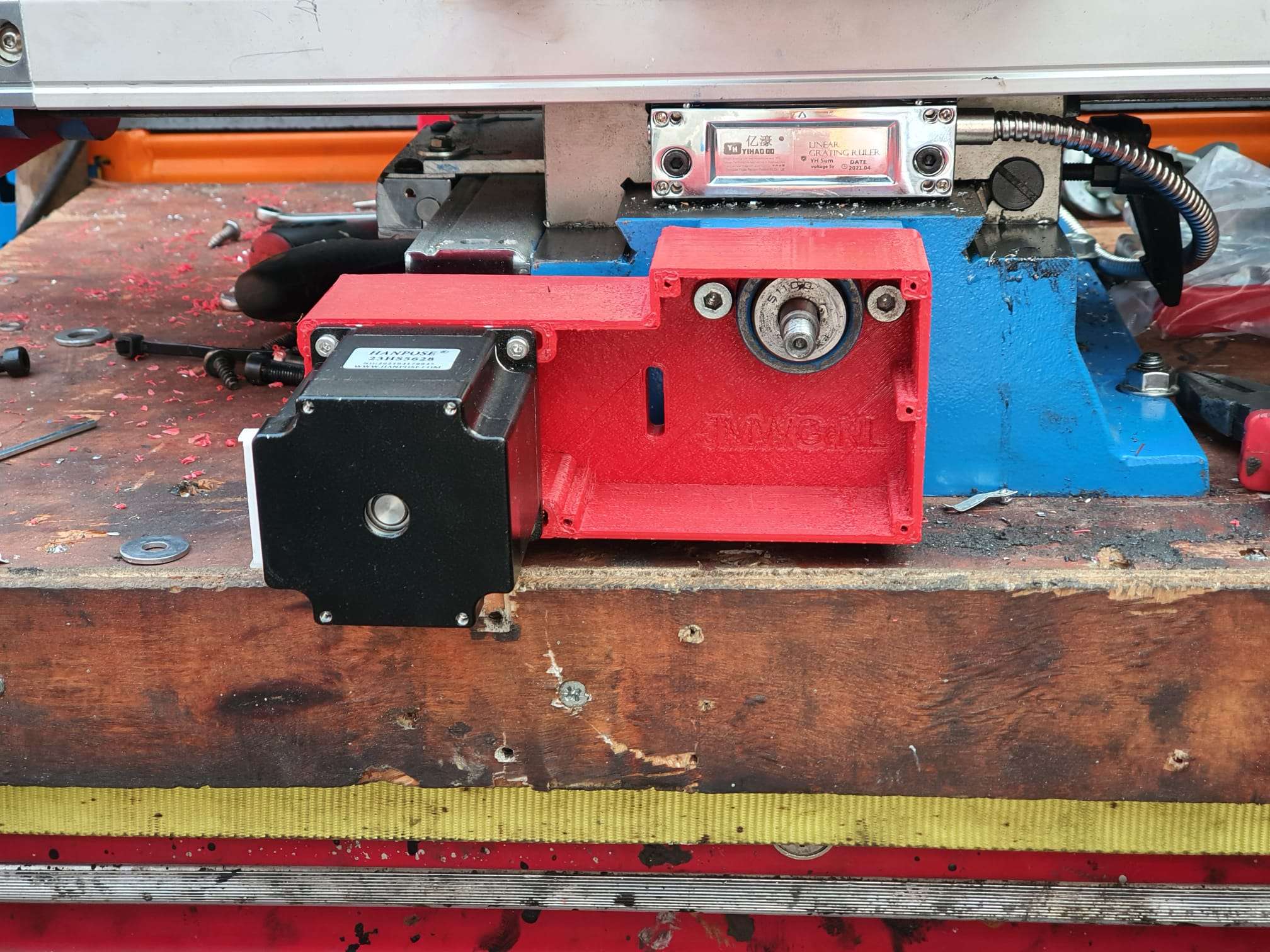
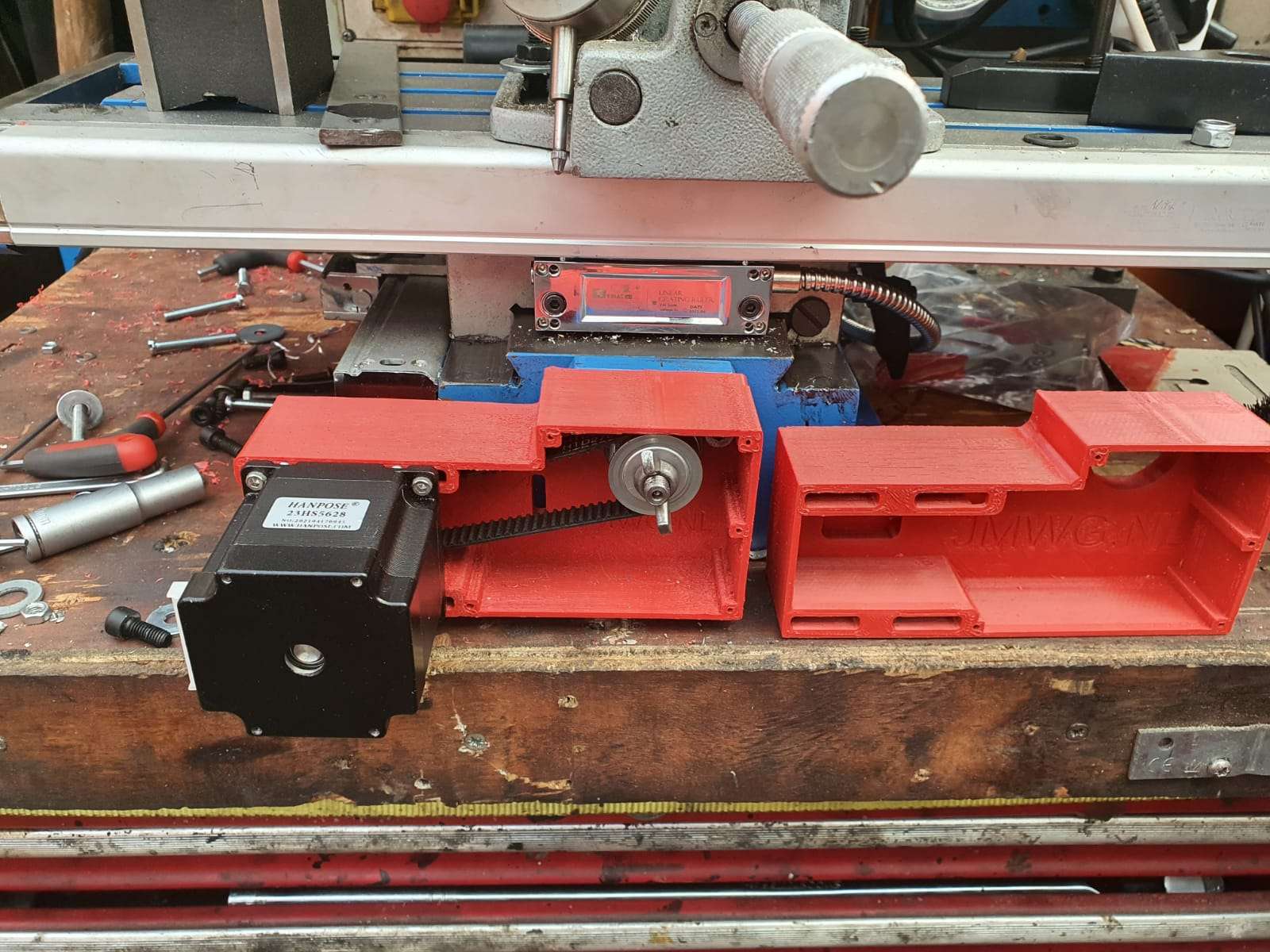
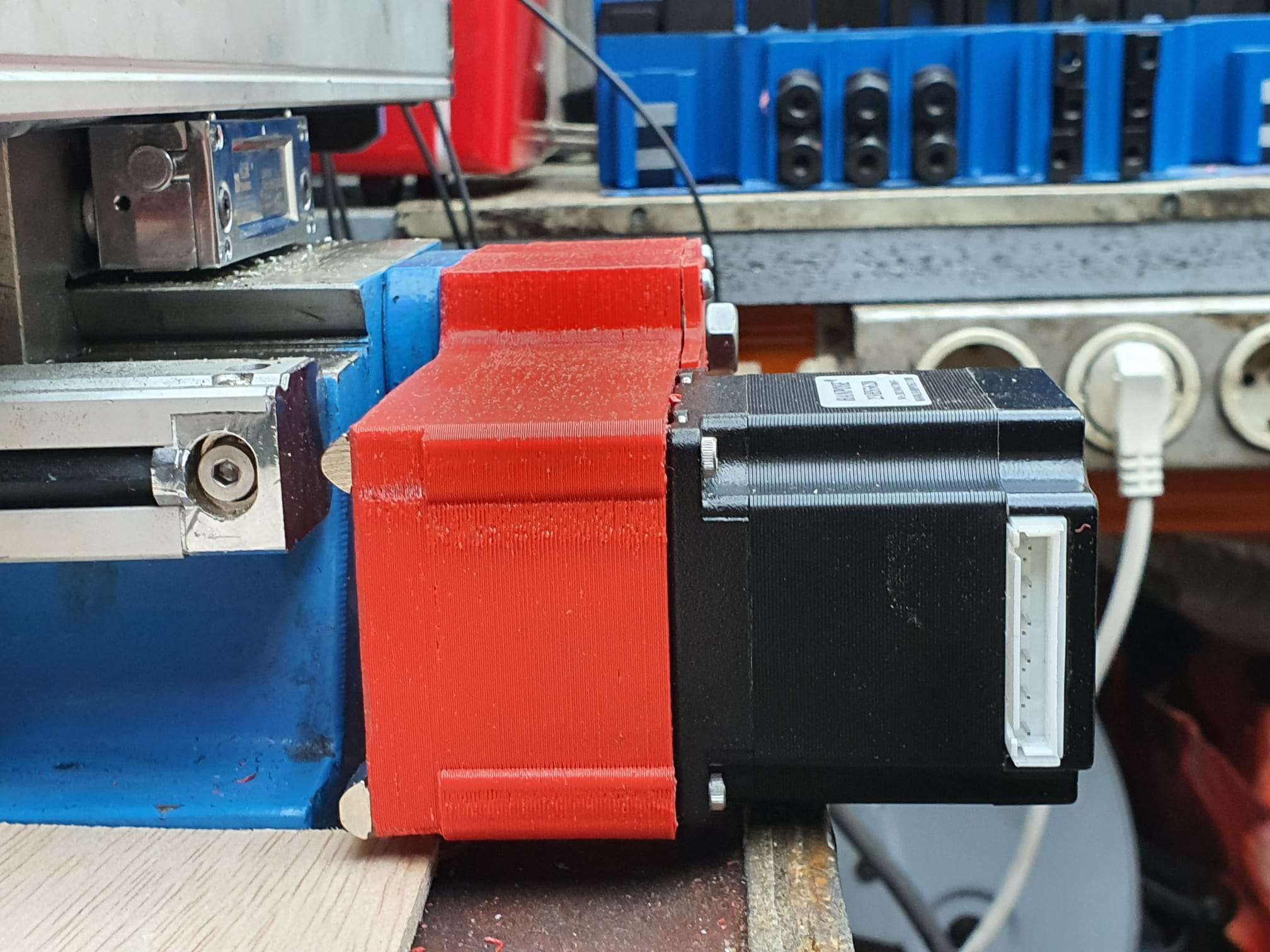
You can 3dprint the entire bottom and debree screen with the risers for the stepper motor at once, as I did in red ABS at 270 degrees C

For this setup you need

  • 1 pice Nema23 56 length stepper motor with 6.35 mm axis
  • 1  piece 12-teethed M3 wheel with collar, hole dia 6.35 mm, 11 mm width
  • 1  piece 24-teethed M3 wheel with NO collar, hole dia 10 mm, 11 mm width
  • Teethed M3 belt , 9 mm wide and length 255 or 275 mm (need to check this)
  • 3d printed parts
  • M8 rings and nut

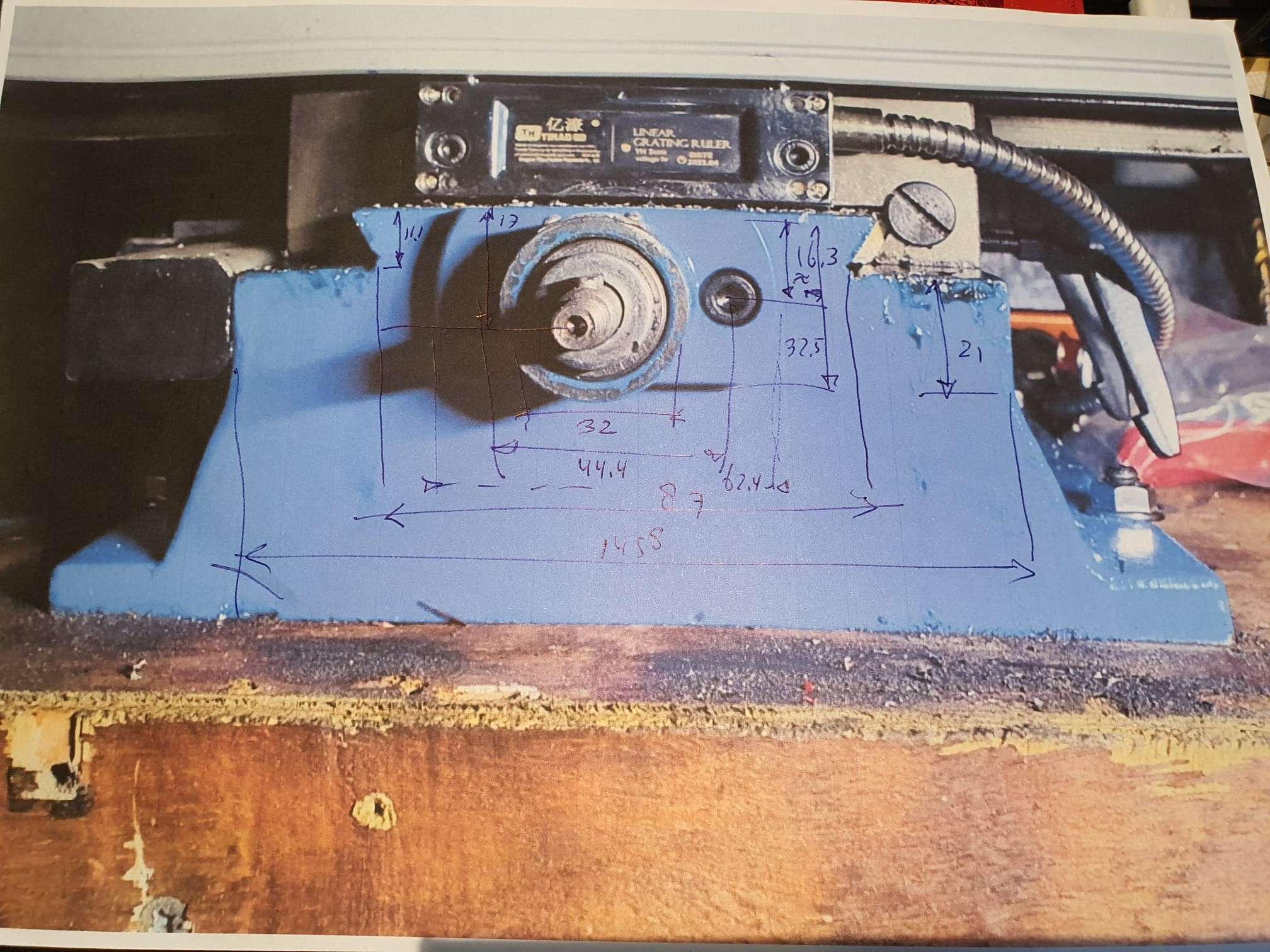
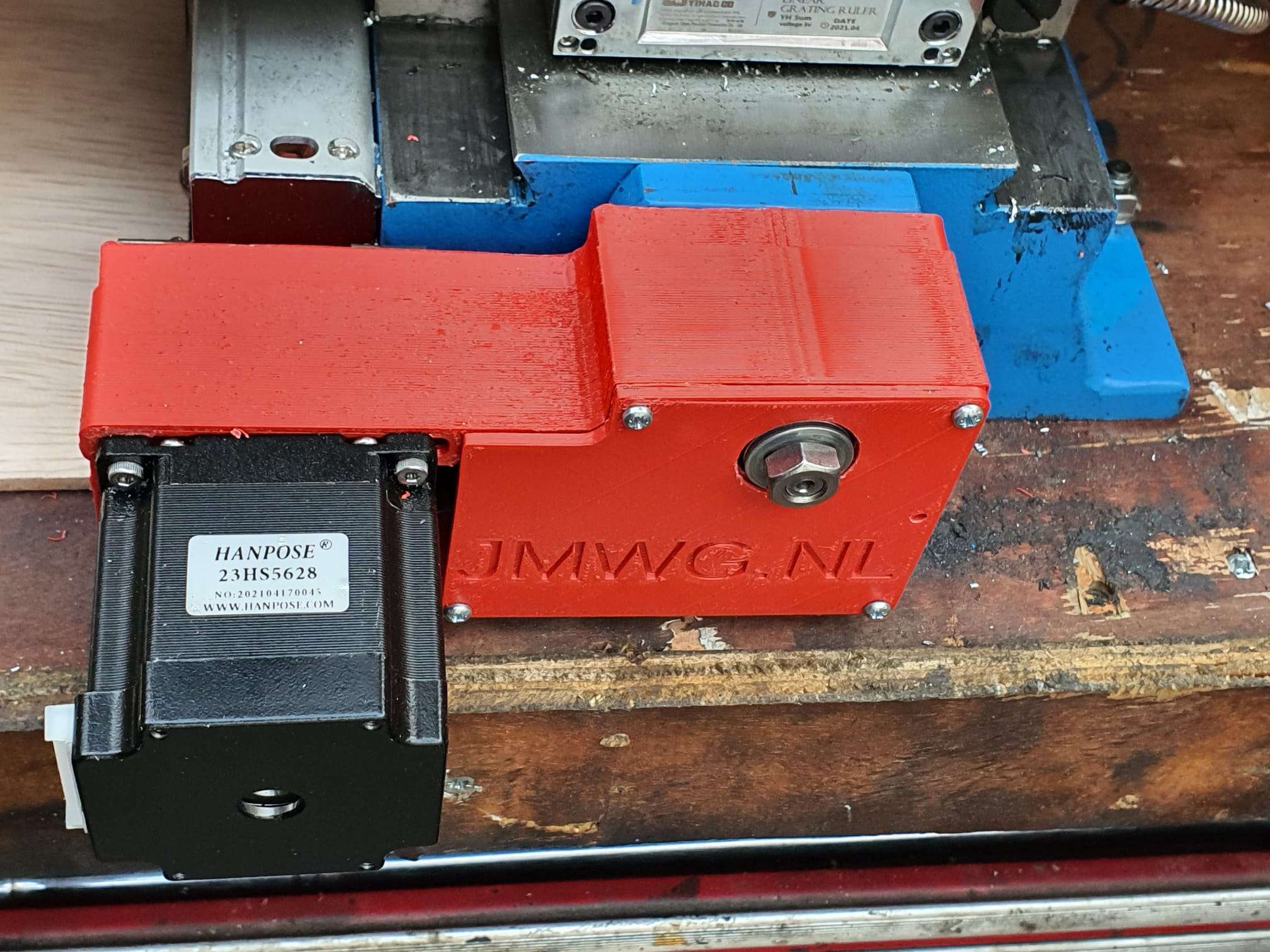
Here the connection is shown onto the X-axis/ leadscrew bearing holder with 2 M6 bolts.

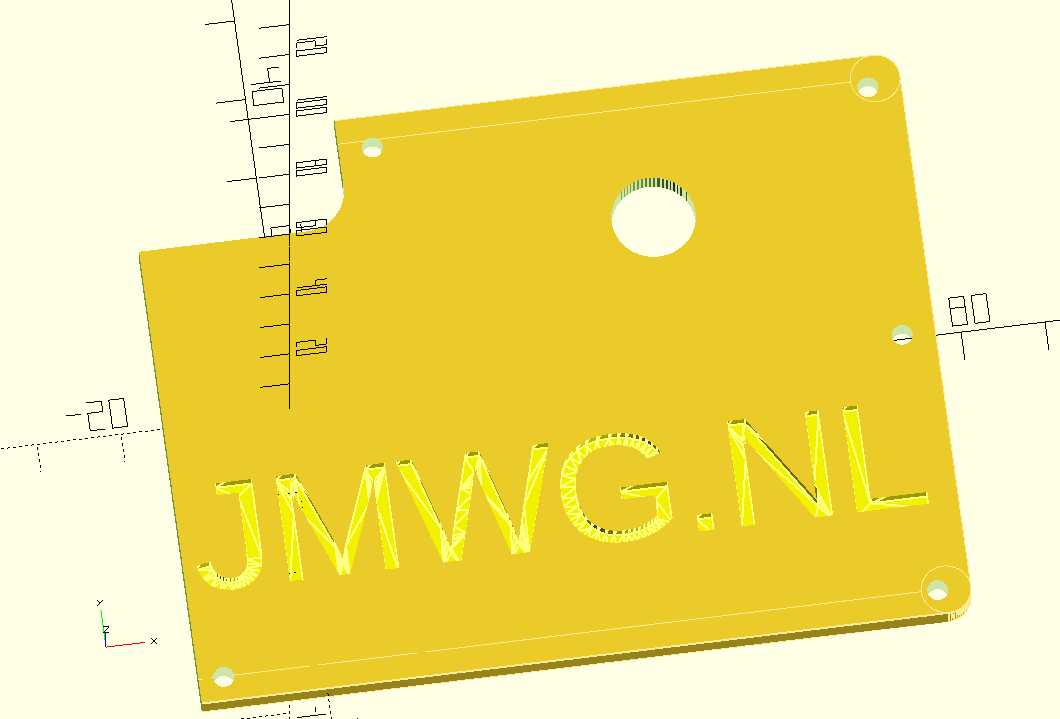
And front lid:

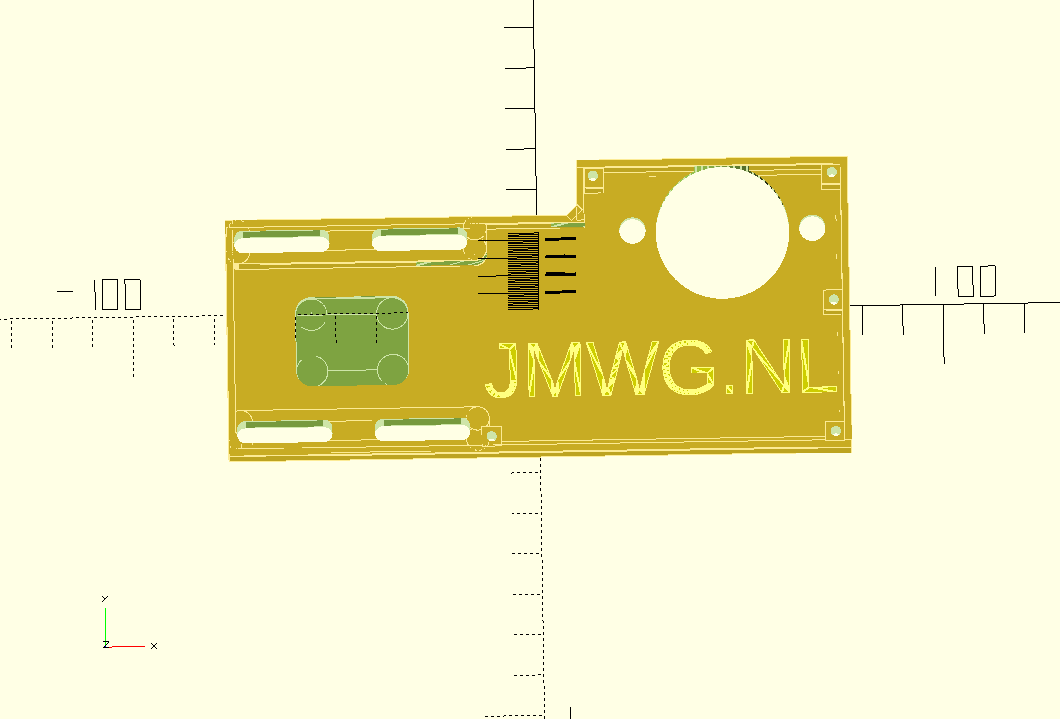
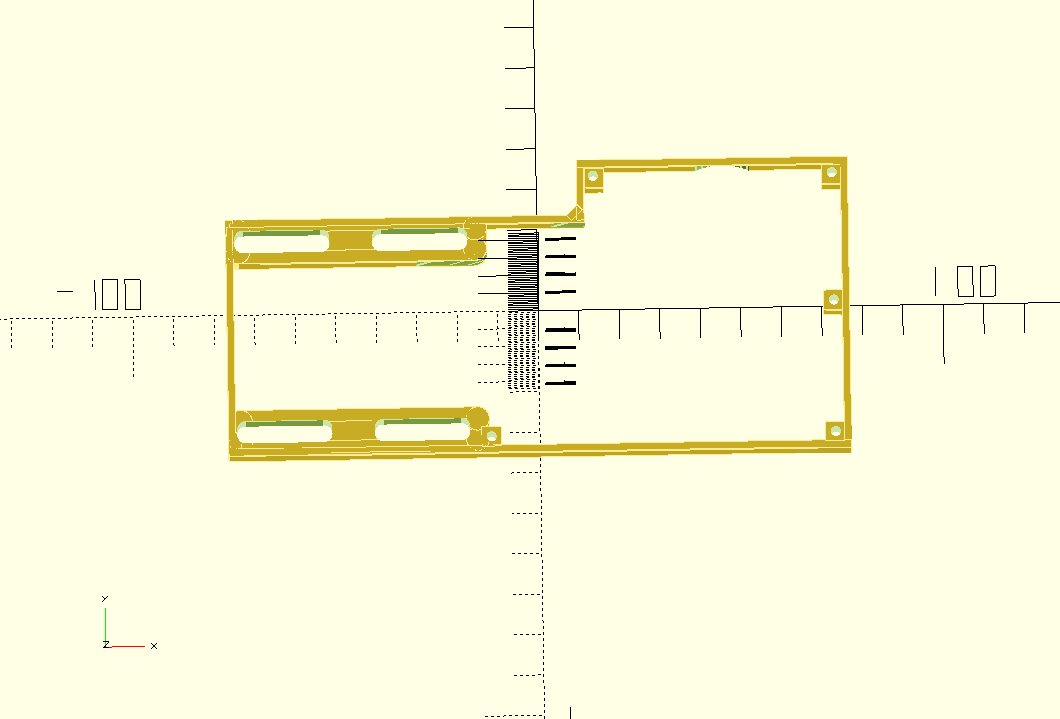
And the Milling design for the base plate for CNC machining in aluminium should you prefer this.

The 3D print file for the debree cover and the stepper motor risers, to be placed on the aluminium milled base plate:

GOTO the Y axis adapter

GOTO the Z axis adapter

DOWNLOAD THE CNC ADAPTER DESIGNS  as STL

Please donate $1 to my paypal account if you use (parts of) my developed materials so I can continue to share nice stuff for you to download

error: Content is protected !!